Select date

Taras Bulba: The Aryan Aristocrat


 2,484 words
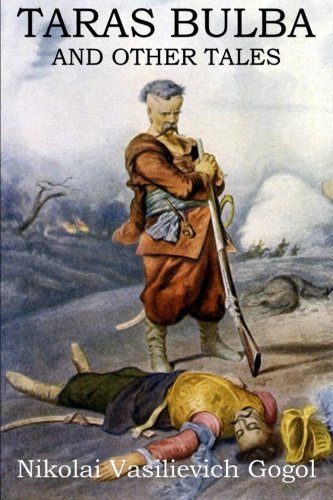
Nikolai Vasilievich Gogol’s Taras Bulba is one of the defining works of Russian literature, indeed, it is often said that without Pushkin and Gogol, there would have been no Russian literature, only books written by Russians. Taras Bulba is a window deep into the grandeur and sorrow of the tempest which is the Russian soul, and more specifically, the soul of the men who inhabit that area of the lands of the Rus which have been called Ukraine, or Little Russia. But far from merely being the thumotic throbbing of an alien people in a faraway land, Taras Bulba speaks to the European soul, the indomitable and ungovernable fire of Aryan man.
Western audiences might be familiar with the 1962 adaptation film starring Yul Brynner. Indeed, differences between the book and movie demonstrate how far removed the modern Westerner is removed from the 15th century Cossack and thereby, from his own savage ancestors who conquered the world. Whereas in the 1962 film, the elderly Taras is spurned into action by the restlessness of his son Andriy to avenge a previous Polish betrayal, in the novel, Taras beholds his two sons, Ostap and Andriy in priestly frocks, as they return home from the Academy in Kiev and decides to present them to the other Cossacks in the Zaporozhian Sich, but not before engaging in fisticuffs in them and dressing them in proper Cossack gear. Once among the Cossacks, Taras decides that his young sons must taste war and so manipulates the politics of the Sich in order to elect a more warlike Koschevoi (leader). Fate then intervenes and grants the Cossacks a cassus belli to fight against the Polish, who are ostensibly humiliating the Orthodox Christians with the aid of the Jews. The Cossacks arise in fury and first vent their anger on the Jews of the Sich, and then march in force on Polish lands.
This contrast alone is enough to warrant an entire book expounding on the different levels of confidence and martial spirit the civilization of Gogol had as opposed to the already decadent and fallen civilization of the year 1962. As I only half-jokingly asked one of my friends and now ask you, dear readers, would you invade Poland to save your son from becoming a robe-wearing, nancy boy intellectual? The sad truth is that our distant grandfathers would have said yes, even as we timidly say no. Such a book has already been written. It is called The Uniqueness of Western Civilization and it was written by no other than Ricardo Duchesne. Taras Bulba in this episode is very much the archetypal steppe aristocrat who will fight for pure prestige, and not even his own, for he is of an advanced age and his days of glory are already past, but for the prestige of his sons who have yet to hear the symphony steel and powder.
There has been much hand-wringing about the literary value of the novel and there will be in the future, least of all in the continuation of this article, but let me take a moment to say that it is a page-turner. Gogol is a master of prose and it shows, even in the somewhat mediocre translation which you can read here for free. Aside from the majestic and exciting battle scenes, even the way the Cossacks prepare for war is adventurous in a way, emerging from Gogol’s pen. The tale to something within every man, every white man indeed and why wouldn’t it? It is the ultimate in family outings — a father taking his two sons to taste the blood of foemen, to conquer new lands and slay enemies of the faith.
As regards the battle scenes, they demonstrate the important tension at the heart of every steppe nomad and indeed every white man, the tension between aristocratic individualism which drives man to impose his will on the surrounding world and the collectivism and obedience necessary to impose that will and ensure the existence of our people and a future for white children. The Cossacks are referred to collectively, whole kurens acting in unison, while the great maneuvers and volley firing with muskets are in play, but once the battles descend into semi-chaotic melees, individual Cossacks come to the fore and demonstrate their bravery, with aristeias depicting their deeds in battle and personal histories in some cases in a manner reminiscent of Homer’s Iliad. We are treated, for example, to an instance of the Cossack Moisiy Shilo defeating a Polish nobleman in single combat, preceded by a narration of Shilo’s exploits in a past raid on the Turks where he deceived them into believing he had converted to Islam and then killed and robbed a lot of them, but thereafter dishonoring himself in the Zaporozhian Sich by thievery and drunkenness, and yet finding forgiveness in the hearts of his brothers for being a brave and great warrior. Immediately following this narration, Shilo is shot by the Polish nobleman’s servants and has but enough strength to call for the eternal honor of Russia.
And the Poles! While the book is a product of its time and has a good deal of anti-Polish sentiment, Gogol faithfully describes the Sarmatist aesthetic prevalent in the time of the Polish-Lithuanian Commonwealth, of the Polish nobles and knights who adorn themselves with gold and silk in the imagined manner of the Sarmatians. The great tragedy being that this aesthetic style of dress and manner is not very different from that of a Cossack and that the war between Cossack and Pole is ultimately a brother war, though a necessary one. We are who we are and European history reflects that, from the times of the steppe nomads who fought each other for pure prestige. An oft-repeated call in battle on both sides is for an equal battle, someone to measure strength against. Indeed, Gogol will often reflect on the bravery and skill of the Poles. It’s easy to look on Poland as a victim nation, partitioned and invaded, but history teaches us that it was at one time a strong nation with imperial ambitions and that the Rzeszpospolita was in many ways the height of Polish civilization, itself reflecting the tension between the aristocratic individual and the collectivism of the military hierarchy, though they are the heroes of a different story.
Taras’ wish is granted. Both his sons attain prestige in battle, Ostap as a cool-headed commander who is soon made hetman of the Oumanski kuren after he avenges the death of the previous hetman Borodaty, and Andriy as a champion, a great warrior who knows no fear. However, as in many things, woman proves to be the ruin of man. While the Cossack host besieges the city of Dubno, Andriy is spotted by a Polish Waiwode’s daughter who knew him from Kiev and seduced by her into joining the Poles. He then gives a treasonous speech which should chill the heart of every one of us, for it represents the sickness which is killing our world. Let the traitor, therefore, speak for himself:
“Who says that the Ukraine is my country? Who gave it to me for my country? Our country is the one our soul longs for, the one which is dearest of all to us. My country is—you! That is my native land, and I bear that country in my heart. I will bear it there all my life, and I will see whether any of the Cossacks can tear it thence. And I will give everything, barter everything, I will destroy myself, for that country!”
Andriy Bulba, rootless cosmopolitan, who will cease being a Cossack and become a Pole, renounce Orthodoxy and become a Catholic, renounce his father and brother and friends and land, for a woman. In our deracinated age, this doesn’t seem so dramatic. A modern-day Andriy would cut off his dick, take hormones, declare himself trans-black, and convert to Islam, while cursing his cisheteronormative toxic masculine father and brother, who perpetuate hierarchies by being hetmans of kurens rather than participate in gardening communes with fellow trans-amputee whamen of color. Oh, and he wouldn’t do it for a woman, obviously, because heterosexuality is icky.
In that one sentence, “our country is the one our soul longs for,” is contained the hubris and arrogance of the gnostic, of the man who believes, Jew-like, that he can heal the world of its pain, not considering for a second that what he believes to be pain is inherent to the world and not a bad thing at all, a man so limited in scope that he believes to know all there is to know, someone so locked up in his own skull that he cannot even conceive of the world which is vast and terrible, but majestically ordered. Traditional man is humble man, a man who kneels before God. A man who knows his strength, but also its limits, a man who understands that he is only as strong as his bond to other men, as stalwart as his faith in God. Andriy Bulba is seduced, indeed, by the Polish girl, but also by the lure of false freedom, the lie that he who has no roots is free. Indeed, this is the primary sin of Faustian man, for the soul that yearns for freedom, the aristocratic individual who imposes his will on the world is always at risk of convincing himself, foolishly, that he is God, that his heart knows better than the world and that intellect or force can overcome the grand rules of nature. That is the great sin of our race and what will destroy the West.
Treason is not tolerated by the Cossacks, and Taras Bulba executes his son by his own hand, though at the cost of the battle. When his leadership is most necessary, he is distracted by the need to punish his wayward son. His other son, Ostap, is also captured by the Polish. Taras is knocked out and rescued by a friend, returned to the Zaporozhian Sich but broken in spirit.
He pays Yankel the Jew, whom he had previously saved from the wrath of the Cossacks, to smuggle him to Warsaw, so that he may rescue Ostap. Yankel the Jew does exactly that, but Taras fails to rescue Ostap, managing to merely let the poor boy know that he is watching and is pleased as Ostap is being tortured, broken at the wheel, and finally executed. True to form as noble savages of the steppe, not one of the Cossacks lets out a single sound while being horrifically tortured. Old Bulba has now given all he has to give to his nation and his prestige is secure. His raison d’être as an Aryan aristocrat is fulfilled. He is ready to die and the story now only requires his death.
The rest of the novel chronicles Taras’ roaring revenge, culminating in his capture and execution, as well as his prophecy that a new Tsar will arise to unify all the Russias, indeed all Slavs under the banner of the faith. This part is known to have been tacked on 7 years after the completion of the novel, at the behest of Russian government censors, and it is in many ways a concentrated dose of anti-Polish sentiment. Whereas previous parts of the novel portray the Polish as “the Other,” enemies and worthy enemies at that, this part goes beyond the necessary Schmittean friend-enemy distinction, which needn’t be hateful, and portrays the Polish as deceitful and oathbreakers (although not without basis in historical fact). This does not quite detract from the quality of the novel. As we have mentioned before, Gogol is a master of prose and the reader will intently imbibe the story.
Of note is the novel’s portrayal of Jews. Needless to say, Gogol was redpilled on the JQ. He was more redpilled than most of the dissident right. In Yankel the Jew, we see the moneylender and innkeeper who poisons gentiles with debt and booze, but rather than completely reject Jews, Gogol takes the pragmatic position that they have their uses and are suited for such labor as doesn’t fit a God-fearing Christian and yet is necessary and useful to the state, with that caveat that Jews will face pogroms if they get too big for their stringy trousers. Of note is also that while the Cossacks will speak of the Poles as the enemy and decry Polish Catholicism as heresy, mostly in the service of Schmittean friend-enemy distinction, it is from the mouths of Jewish characters that they truly hateful descriptions of Poles arise. Doubtless, such words are also used for Cossacks when the Polish are around.
Finally, a word on geography. The Cossack is a phenomenon of the Ukraine, and the Ukraine is, as its name will tell you, the borderland. Its wide-open steppes make it a nightmare to defend and difficult to define. Is it Russian, or something else? Who is to say? History has shown us that it is nigh-impossible to effectively govern, not from Warsaw, not from Vienna, not from Moscow, and despite the best efforts of colored revolutionaries, not from Brussels and Washington. The sad side effect is that the proximity of great nations has in all probability prevented the process of ethnogenesis and the people are therefore still in a sense not their own, but odds and ends which under sufficient pressure will form into a nation. In Gogol’s novel, this vacuum is filled by the Orthodox faith which provides asabiyyah and friend-enemy distinctions to the Cossacks. Of note is that the Orthodoxy of the Cossacks is a warrior faith — they do not keep fasts and do not forgive. Vengeance is a virtue among them and violence celebrated for its own sake. The Cossacks are the army of Christ envisioned in this article, serving God but not the Church. This is what a healthy society should look like, warriors on top served by priests, rather than the other way around.
We in the civilized West live in sprawling citadels of steel and glass. We are far from the Pontic-Caspian steppe where our ancestors fought for prestige, far from the warrior kings who conquered Europe, Iran, and India and imposed their will, far from the joy brought by battle. We are even more importantly far from each other, there can be no Männerbund, no Druzhina, no Kuren. We do not revel, we do not fight, we do not invade Poland just to give our sons a taste of war, and we do not pass judgment on those same sons when they desert, betray and disappoint us. And yet within each of us lives this steppe aristocrat, this physically effervescent Aryan man who will do exactly that if pushed, who will stand athwart unspeakable opprobrium and spitefully snarl at the enemy. There lives inside you a hetman of our people, a Taras Bulba.