Select date

ONE HEALTH – Globalist Path to a One World Order


Freddie Ponton
21st Century Wire
I would like to think that many would agree when I say the world we once knew seems to have taken a very strange path, to say the least. As global elites sit comfortably on board of their proverbial public-private partnership super yacht, whilst sipping vintage French XO with their philanthropists cohort and pondering evermore creative ways to keep control of an ever sinking ship, we can only wonder what might be their next diabolical plan.
We saw them parading once more at the World Economic Forum’s annual confab in Davos, where the world’s most wealthy and powerful technocrats gather to discuss the ‘big ideas’, and how they plan to tackle new challenges, and fine tune their elaborate master plans, not least of all warding off another new and sneaky threat, like the latest “disease X”, or as William Henry Gates III likes to call it, ‘the next pandemic.’ Clearly, a hypothetical disease due to some unknown exotic virus, said to be likely (or rather unlikely) to cause a serious pandemic.
In 2018, if you remember, the World Health Organization (WHO) followed by the World Economic Forum (WEF), added this “disease X” to the list of pathogens that could pose a danger to humanity. A truly disturbing prophecy, when just two years later, the world’s greatest-ever respiratory plague, “Covid-19”, suddenly emerged to take the world by storm. Ironically, this pandemic was a perfect model of “disease X”, how timely!
A true game changer, Covid-19 was presented to mankind as a likely zoonosis, an infectious disease that is transmitted between species from animals to humans, or from humans to animals.
Already in their starting blocks, the world’s mainstream media began orchestrating a perfectly harmonised symphony, presenting us with around-the-clock news programs and bulletins, featuring an endless carousel of self-proclaimed science experts, public health mavens, and grandstanding politicians and reiterating the identical script: the introduction of a novel coronavirus allegedly from “an animal reservoir”. Still, the origins of the SARSCoV-2 have managed to escape the world, leaving us with a bevy of assumptions and exotic theories, all of which are making it exceedingly difficult for anyone to wrap their heads around where this show-stopper of a virus came from, or if it even exists in nature, much less what actual threat it ever posed to the human race. Instead of looking for straight forward evidence of a truly purified and isolated version of the SARSCoV-2 virus, many have instead entertained supernatural ‘gain of function’ theories. And with all that speculation, we are, collectively speaking, no closer to discovering the truth what supposedly caused this global upheaval of the last two years.
This leads us to the story of “One Health”. In this article, we will chart its origins, from inception to adoption, in the hopes of better understand how this concept has strangely become the handbook for the contagion business, but also possibly the most powerful instrument of control which globalist oligarchs have devised to date. It is also the underlying concept, and virtual cornerstone of a yet to be realised working global government structure.
The formation and super bureaucratic architecture of this framework is complex and multilayers, but to understand it function and purpose, you only need to remember one thing: whoever controls the “One Health Economies” controls the people, the governments, and by extension, the future of humanity.
What is One Health?
The One Health concept has been in the making for over a decade, but it is now moving into BETA mode. According to the plans outlined by the WHO and its meticulously assembled One Health High-Level Expert Panel (OHHLEP), One Health is an integrated, unifying approach which aims to sustainably balance and optimize the health of people, animals and ecosystems across the planet. It is the new global society framework upon which all new sustainable development initiatives and transitional systems will be built, and is the basis for the implementation of a new global world order.
One Health claims to recognize the health of humans, domestic and wild animals, plants, and the wider environmental ecosystem, as closely linked and ‘interdependent’.
The approach mobilizes multiple sectors, disciplines and communities at varying levels of society, all meant to work together to foster well-being and tackle emerging threats to health and ecosystems, while addressing the collective need for clean water, energy and air, safe and nutritious food, taking action on climate change, and contributing to the ongoing objective of sustainable development.
Indeed, it seems they do care very much for our well-being.
The importance of establishing a One Health Definition was first raised by the OHHLEP, and later agreed by the four main stakeholder partners, referred as the United Nations Quadripartite, tasked with developing a common language and understanding around the new concept of One Health.
The WHO, along with the Food and Agriculture Organization of the United Nations (FAO), the World Organisation for Animal Health (OIE), and more recently the United Nations Environment Programme (UNEP), all welcomed the newly formed operational definition of One Health (my humble experience tells me that rarely people disagree when potentially billions of dollars in public money is about to be thrown their way).

Let’s start by reviewing this Quadripartite (WHO, FAO, OIE, UNEP), the four organizations now working together to mainstream One Health, supposedly conceived in order to help humanity prepare for and prevent, predict, detect, and respond to ‘global health’ threats, and promote sustainable development.
The Food and Agriculture Organization of the United Nations (FAO) provides us with a great clue, stated on their website:
“The application of a One Health approach is a critical one for achieving the UN 2030 Agenda for Sustainable Development and the related Sustainable Development Goals (SDGs)”.
“We are One World working together for One Heath”.
You may have noticed that One Health has been getting a lot of traction recently, particularly in response to quantifying diseases’ impact on the economy, a burden can be calculated, even if the methodologies and results remain heavily debated. For example, in a 2011 paper, Making Sense of One Health, we can read comment made by Jean Kamanzi, a Senior Officer at the World Bank and currently with UN FAO Regional Food Safety officer for Africa, estimating that SARS-1 would have cost $50 billion, foot and mouth (FMD) in the UK $30 billion, FMD in Taiwan, $5-8 billion, bovine spongiform encephalopathy (BSE) in the UK $10-13 billion, and Nipah virus in Malaysia $350-400 million.
In another estimation, economists consider that the emergence of BSE, SARS, Avian flu (H5N1), and swine flu (H1N1) have caused over $20 billion in direct economic losses over the last decade, and in excess of $200 billion in indirect losses.
One Health claims to solve these problems.
Once the importance of infectious diseases was ascertained, the question became, what are the options for preventing and controlling them? “The One Health approach” was deemed by the Quadripartite to be a valid solution and potential response to address these challenges, but without giving a clear explanation as to why suddenly, as the old global economic model is being collapsed, that all of these exotic viruses are suddenly taking the center stage, and creating what appears to be orchestrated chaos. Judging by what we have all witnessed over the last two years in terms of the ‘global response’ to COVID-19, you would have thought that we never had to deal with viruses and epidemics before.
Follow the Money – One Health & The World Bank
For its part, the World Bank has outlined its version of the One Health mission, and has positioned itself as the central player to be added to UN Tripartite (that was before UNEP came on board), as it was difficult to fully exclude them from the formal alliance. The World Bank really pushed hard to implement, One Health, that is, to transform it into a workable concept that can allow for ongoing fundraising. It is also the organization that invested the most heavily in shaping One Health into a coherent and more developed globalist discourse (since when a bank is a charity).
However, at an earlier stage, the World Bank was regarded with caution by the FAO, WHO, OIE, as some were fearing that the World Bank was interpreting One Health as a tool to redefine the role of animals in public health, as the World Bank was said to be aiming to fuse public health and veterinary services. Despite their denials in this regard, they have clearly advanced this agenda a long way.
Such a fear was certainly justified and transpired in a statement made by Bernard Vallat in 2009, then the Director General of the OIE, and this is what he said:
The concept ‘One World, One Health‟ should not serve as a pretext for dangerous initiatives like trying to achieve economies of scale based on purely theoretical notions worthy of a sorcerer‟s apprentice, such as trying to merge the Veterinary Services and the Public Health Services.
Here it is important to acknowledge that there are, in fact, pockets of dissent within different globalist institutions.
The issue of the merging of public health and animal services was a tense one then, which certainly damaged the architectural efforts by World Bank. However, with its habit of raising funds, and with its will to remain involved in One Health, the World Bank proved to be difficult to set aside, and remains to this day an important partner in managing the governance of One Health.
New arrivals to the One Health party
There are other organisations which have been at the margins of the One Health for some time, but have since been integrated to the global alliance. These are the United Nations International Children’s Emergency Fund (UNICEF), United Nations Environment Programme (UNEP), and United Nations Development Programme (UNDP). All have embraced the One Health doctrine which emphasizes the need to view human health and well-being as a subset of environmental health. This is a key concept, and one of the foundational principles of One Health, which folds everything into an environmental envelope, along with all the various eco imperatives, including climate change.
It seems the global order has a plan, and somehow One Health is at the very heart of it.
In November 2020, at the Paris Peace Forum, these four organisations met to further enhance their cross-sectoral collaboration by creating a multidisciplinary One Health High-Level Expert Panel (OHHLEP), launched by none other than Dr Tedros Adhanom Ghebreyesus, the Director-General of the World Health Organisation, and with the support of the governments of France and Germany.
Watch as Dr Tedros Adhanom Ghebreyesus launches the Health High Level Expert Panel:
.
The History of One Health
According to their website, the One Health Initiative began as a movement in the United States to forge ‘co-equal, all-inclusive collaborations’ between the range of actors and stakeholders in the public health space – physicians, osteopathic physicians, nurses, veterinarians, dentists, and other scientific and environmentally related disciplines. Other key stakeholder organisations include the American Medical Association, American Veterinary Medical Association, American Academy of Pediatrics, American Nurses Association, American Association of Public Health Physicians, the American Society of Tropical Medicine and Hygiene, the Centers for Disease Control and Prevention (CDC), the United States Department of Agriculture (USDA), and the U.S. National Environmental Health Association (NEHA).
Additionally, more than 950 prominent scientists, physicians and veterinarians worldwide had endorsed the initiative.
According to its description and statement on the US FDA’s own website, One Health (formerly called One Medicine) says it was set-up “to improve the lives of all species, human & animal through the integration of human medicine, veterinary medicine, and environmental science.”
The CDC, who rapidly became a believer and eventually an umbrella organization for the initiative, provides here a good historical background of One Health and its precursors. Although it is a globalist organization, One Health was actually born in 2007, in the United States.
The modern, globalized concept of “One World, One Health” was put forward by the Wildlife Conservation Society at a symposium in New York in 2004 hosted by Rockefeller University. To sell the concept, they used case studies on Ebola, Avian Influenza, and Chronic Wasting Disease, as examples of threats to global public health. The assembled expert panelists delineated priorities for an international, interdisciplinary approach for combating threats to ‘the health of life on Earth.’
While this sounds altruistic on its surface, it raises a few key questions as to the true motivation of this unprecedented global enterprise. Why won’t they focus on the world’s biggest killers, such as Ischaemic heart disease, which is responsible for 16% of the world’s total deaths, and rising by more than 2 million to 8.9 million deaths in 2019 according to the WHO?
It is not also worth noting that stroke and chronic obstructive pulmonary disease are the second and third leading causes of death, responsible for approximately 11% and 6% (respectively) of total deaths worldwide? How about lower respiratory infections that remained the world’s most deadly communicable disease, ranked as the fourth leading cause of death.
So why are all of these tropical and other diseases suddenly considered ‘major threats’, thus forcing the scientific world to revisit the way there were looking at global public health?
A central question emerges: is One Health a Global Security Agenda?
About “One World, One Health”
According to their literature, “One World, One Health” is based on a set of principles referred to as the “Manhattan Principles” by the organizers of the One World, One Health event who presented their list of 12 recommendations (see here) for establishing ‘a more holistic approach’ to preventing supposed epizootic diseases, and also “for maintaining ecosystem integrity’ for the benefit of humans, their domesticated animals, and also ‘for the foundational biodiversity that supports us all.”
It is also worth noting also the Berlin Principles on One Health,which were formatted at the 2019 One World, One Health, One Future Conference sponsored by the German Federal Foreign Office (FFO) in partnership with the Wildlife Conservation Society (WCS).
We can now see how this ambitious framework seeks to combine human and animal health into one singularity, and to pool the risk of alleged ‘outbreaks’ under the same umbrella of ‘global public health.’ The implications of this are immense, and should not be understated.
In 2020, a “One World, One Health, One Future” virtual event was held under the same patronage. The concept was developed by six international organizations who released their joint Strategic Framework entitled, “Contributing to One World, One Health: A Strategic Framework for Reducing Risks of Infectious Diseases at the Animal-Human-Ecosystems Interface” at the International Ministerial Conference on Avian and Pandemic Influenza, held in Sharm el-Sheikh, Egypt, October 2008. Representatives included specialists from the WHO, the UN Food and Agriculture Organization (FOA), CDC, the United States Geological Survey National Wildlife Health Center (USGS), the United States Department of Agriculture (USDA), the Canadian Cooperative Wildlife Health Centre (CWHC), the Laboratoire Nationale de Sante Publique of Brazzaville in the Republic of Congo (LNSP-CG), the IUCN Commission on Environmental Law, and the Wildlife Conservation Society (WCS), among other stakeholders.
Since there was insufficient time to discuss the Framework at the meeting in Egypt, Canada agreed to host an addendum international expert consultation. This was held from March 16-19, 2009, in Winnipeg. It was done under the auspices of the Public Health Agency of Canada’s Centre for Food-borne, Environmental and Zoonotic Infectious Diseases (CFEZID), who also hosted the One World One Health Expert Consultation in Manitoba. Beside the usual suspects, one must note the participation of UNICEF, as well as the World Bank, and the bio surveillance agency, the United Nations System Influenza Coordination (UNSIC).
Subsequently, The One Health Commission was formed to facilitate the coordination of these organizations, and in November 2009 a One Health Summit was held in partnership with the National Academies of Science in Washington, D.C. The event’s nine speakers included senior officials from the USDA, CDC, FDA, NIEHS, USAID, members of academia, state governments, and the Kansas Bioscience Organization also participated.
One_Health_InitiativeTask_Force_Mem_306367AC81F70
.
Also at the event, Rear Admiral Ali Khan, Acting Director of The National Center for Zoonotic, Vector-Borne, and Enteric Diseases at the CDC, spoke on the topic of “One Health in Action.” I am not sure if he knew how far this initiative would go, but he clearly had a specific vision and plan, as one would expect from a high ranking naval officer. It is very likely that the eventual blueprint for One Health was born that day.
It’s crucial to note that this event was taking place in the midst of the 2009 H1N1 Swine Flu pseudo pandemic, which was later exposed by a number of researchers and journalists as an over-hyped global event, but one which helped the WHO and other actors consolidate more bureaucratic power and authority in terms of declaring pandemics, and helping to spearhead the global distribution of pharmaceutical ‘solutions’ such as Tamiflu, vaccines and other products. That said, Rear Admiral Khan did not miss the chance to remind the audience that as of November 8, 2009, the World Health Organization reported over 503,000 alleged confirmed ‘cases’ of H1N1, and at least 6,260 deaths from the influenza. He identified key factors in the influenza’s emergence, including “microbial adaptation, changing ecosystems, international travel and commerce, and human susceptibility to infection.”
Again, the animal and ‘zoonosis’ angle is centre stage here. Dr. Khan underscored the importance of “recognizing and addressing disease emergence at the interface of animals, humans and environmental health.” He also called for “looking beyond humans to expand opportunities for disease detection, control and prevention.”
Dr. Khan outlined five key steps for success in this endeavor, all of which are designed to solidify the centralization of power and authority around new alleged pandemics:
- Leadership: create a global initiative for targeted One Health activities
- Investment: develop a worldwide surveillance and response system
- Integration: develop diagnostic platforms for use in humans, animals and the environment
- Research: create new tools to identify pathogens and approaches for integrating information systems
- Respectful Partnerships: secure partnerships across sectors in the U.S. and abroad
At this point, it is difficult to deny that 13 years ago this globalist confab had already figured out a blueprint for an agenda which was fully activated in 2020.
ohcsummitexecutivesummary20091201b_28D1C919BD197
.
The One Health Initiative Task Force Members who were part of the One Health Commission, have since been integrated the CDC, and have now become the US Center for Disease Control (CDC) One Health Office.
CDC’s One Health Office has become the agency’s lead for all One Health activities both domestically and globally. Established in 2009, it was the first formal office dedicated to One Health in an established US federal agency. Today, their office is located within the National Center for Emerging and Zoonotic Infectious Diseases (NCEZID) at CDC in Atlanta.
As a functioning public relations arm, One Health Office is also tasked with promoting the “One Health approach,” and to increase awareness of CDC’s role in One Health in the United States and around the world.
A few questions already come to mind, especially when looking at the US partners involved in this initiative (USDA, CDC, FDA, NIEHS, USAID), and looking at potential synergies between the One Health agenda and the Covid-19 pandemic, but also at the One health coalition partners such as US Department of Defense (DOD) and its sub-agency, the Defense Threat Reduction Agency (DTRA) who happened to finance some 30 Biolabs in Ukraine, and 300 other similar operations around the world, not to mention their financial support to companies such as Ecohealth Alliance and Metabiota which are detailed in my previous article, Pentagon-Ukraine Bio Labs: The Hunter Biden Connections.
As mentioned above, the 2004 One World, One Health Symposium which was held in New York was put forward by the Field Wildlife Conservation Society, where Dr. William B. Karesh was directing their veterinary program. He is currently the Executive Vice President for Health and Policy at none other than Ecohealth Alliance, a company who had its fare share of controversial studies, along with Fauci and NIH funded R&D programs around the world, most notably in China at the Wuhan Institute of Virology. The controversial bio surveillance outfit EcoHealth is headed by CEO Peter Daszak was suspected of carrying out supposedly dangerous “gain of function” research work with Shi Zhengli, a leading Chinese virologist, also known also as “the bat lady.”
It is believed that Dr William Karesh coined the term “One Health” back in 2003, and his journey since on board the One Health train has been nothing but spectacular. He serves as the president of the World Animal Health Organization (OIE) and oversees its Working Group on Wildlife Diseases, and also chairs the International Union for the Conservation of Nature (IUCN) and its Wildlife Health Specialist Group, a network of wildlife and health experts from around the world. Dr. Karesh also serves on the WHO’s International Health Regulations Roster of Experts who focus on the human-animal interface and wildlife health. Dr. Karesh was also the Emerging Pandemic Threats (EPT), as well as Partner Liaison for the USAID PREDICT-2 bio surveillance program.
To clarify my own position, I reserve serious skepticism about many of the widely held assumptions regarding Gain of Function (GOF) claims and its theoretical basis, which has been conveniently pushed by numerous media outlets and politicians as the answer to all of our unanswered questions regarding the supposed “origins of Covid.” However, I do support a continued open debate on this issue.
While One Health has over the past 15 years established itself in the life sciences, veterinary medicine, and biomedical sciences, it still remains obscured from public view, hence the reason for compiling the research contained in this article.
One thing for is for sure: the One health Commission seems to be following very closely the development of the COVID-19 pandemic, and is now urgently recommending the need to implement the One Health approach globally. If you take the time to follow the links featured one the One Health Commission’s webpage, you will find a plethora of information explaining the role which One Health played in the COVID-19 response, and much more.
You will also learn how in Ireland, a One Health team was assembled to help parameterise complex mathematical and resource models, and how in New South Wales, Australia, state authorities “engaged collaboratively with animal health veterinarians and epidemiologists to leverage disease outbreak knowledge, expertise and technical and support structures for application to the COVID-19 emergency.”
You will also discover how the African One Health University Network linked members from various health institutions and universities from eight countries to provide a virtual platform for knowledge exchange on COVID-19 in order to support the global response.
As you would expect, epidemiological computer modeling features heavily on these knowledge sharing platforms, the same sort of modeling sold to governments by the likes of Imperial College epidemiologist Neil Ferguson, who wildly exaggerated the projected death toll from COVID back in the spring of 2020. It was these overinflated imaginary models which were used to justify lockdowns and other harmful virus mitigation policies.
Key Players Behind ‘The One Health Platform’
As you will read in the 2015 One Health Commission history PDF document, the One health Commission was invited to participate in the International One Health Platform Foundation. Of course, the billion dollar question here is this: what is the One Health Platform Foundation, and who is behind it?

The One-Health Platform (also seen here at www.onehealthplatform.com) was founded in 2015, and describes itself as a “scientific resource center and a hub for stakeholders in One Health.” It claims to be an autonomous, non-profit organization, and is accompanied by the World One Health Congress as the largest “One Health” event of the year for experts and researchers from around the world, serialised in its One Health Outlook, an official journal which is “aiming to promote the collaboration, connection and rapid sharing of information within all fields of research relevant to One Health through open access publishing.”
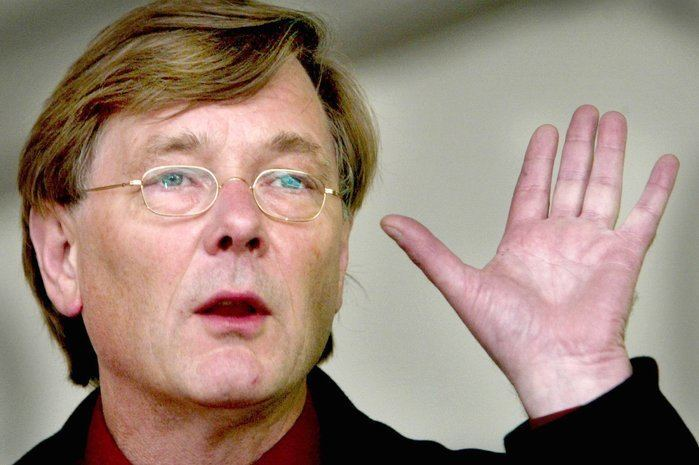
Prof. Ab Osterhaus Prof. John Mackenzie Chris Vanlangendonck
The management board on the One Health Platform is made up of Professor Ab Osterhaus, known throughout the world for his work on SARS1 and H5N1, the pathogen alleged to have causes avian influenza, Professor John Mackenzie, and Professor Chris Vanlangendonck.
During the course of my research, some key clues emerged which reinforced my belief that the One Health Platform and its One Health Outlook publication would indeed point me in the right direction as to who else is driving this globalised operation. Finding people such as Christian Drosten (author of the problematic RT-PCR ‘gold standard’ assay for the WHO), Peter Daszak (CEO EcoHealth Alliance), William Karesh (DVM, EcoHealth Alliance) as part of the One Health Outlook Editorial Board certainly motivated me to dig further.
The One Health Outlook is headed by Editor-in-Chief, Ab Osterhaus PhD, Research Center of Emerging Infections and Zoonoses, Germany at the University of Veterinary Medicine in Hannover known as TiHo who is a member of the German Center for Infection Research (DZIF), under whose umbrella about 150 scientists from 27 institutions at seven locations cooperate.
Here is a video of Ab Osterhaus known also as ‘Dr Flu’ in his capacity of scientific advisor for the Artemis One Health Foundation in the Netherlands. Albert Osterhaus is no small fish, and his name keeps on appearing in many corruption scandals such as the notorious “Mexican Flu” scandal.
Video: Ab Osterhaus – Artemis One Health Foundation
Osterhaus is amongst the leading One Health scientists who are pushing the highly contentious “spillover theory” which advances the narrative that wherever humans further encroach on the natural world, pushing into the territories of animals, it brings them into contact with new and exotic microbes that live there, and which sometimes jump across species boundaries in “zoonotic” fashion, where they allegedly mutate and cause diseases. Is it true? While it currently serves are the basis for all the entire global apparatus we have shown already, and is widely regarded as the consensus in mainstream virology circles, the theory is still highly debatable, and may not be the global threat it is touted as.
I was surprised (or perhaps not) to find out that One Health Platform was also registered in 2015 as a company headed by Ab Osterhaus, registered at 35 22nd St East, Saskatoon, Saskatchewan, S7K 0C8, Canada, and at No1 Zevensterstraat, Laarne, Flanders, 9270 in Belgium, the country where the European Council is headquartered, and we will see later why this may be important.
One Health: Not So Non-Profit After All
It is impossible to describe the One Health Platform without including the International One Health Coalition (IOHC), a collaborative partnership between the One Health Platform and existing international governmental and non-governmental organizations and institutions.
The IOHC claims to reinforce the One Health concept where the coalition partners can set up a framework for information-sharing, cooperation and awareness raising activities. Through the International One Health Coalition, the foundation builds a global community of One Health stakeholders including with the Pentagon’s Defense Threat Reduction Agency (DTRA), the Bill and Melinda Gates Foundation, the CDC, and many more.
‘Once Health’ Promoted by President of France Emmanuel Macron
During the 75th World Health Assembly held in Geneva, Switzerland, held on 22-28 May 2022, French President Emmanuel Macron inserted a brief remark regarding One Health, and knowing this president, this was not a coincidence. It was for surely a coded message addressed to the global health policymakers, confirming that One Health was on track and should be fully integrated in the new Global Health Security Policy structure. This represents a big step, especially at a moment when a looming treaty on pandemic prevention, preparedness and response is being negotiated between the European Council and the WHO. See the full video here.
Emmanuel Macron pushing the One health agenda at the 75th World Health Assembly:
On January 1, 2021, a former French government agency known as the ANRS (Emerging Infectious Diseases) was restructured into an autonomous body under the roof of another French public agency, Inserm. This new independent body was created with the mission of funding, coordinating and leading research on various infectious diseases like HIV/AIDS, viral hepatitis, STIs and tuberculosis, and also the bevy of emerging respiratory infections including Covid-19, viral hemorrhagic fevers, arboviruses and many more. The French government was now relying on the ANRS and on the scientific consortium known as REACTing and its expertise, in responding to crises related to emerging diseases. Both organisation ended up merging in December 2020, but kept the acronym ANRS.
Amongst the ANRS international partners you will find the Bill and Melinda Gates Foundation, Anthony Fauci’s NIH/ NIAID (National Institute of Allergy and Infectious Diseases), the WHO, and the DZIF (German Center for Infection Research), just to name a few (see a full list here). It’s important to note that all these organizations were deeply involved in pushing the global COVID-19 vaccination program.
The ANRS is also the sponsor of numerous therapeutic trials. These are mainly aimed at evaluating new therapeutic strategies like vaccines. As a result, the ANRS engages in collaborations with the biggest transnational pharmaceutical companies.
Whilst the ANRS was building international partnerships, with a One Health Approach, focusing on human and animal health and the impact of humans on the environment, the agency prepared the response to the scientific challenges posed by emerging diseases, and was was placed under the supervision of the Ministry of Higher Education, Research and Innovation and the Ministry of Solidarity and Health. The ANRS is headed by none other than Dr Yazdan Yazdanpanah, a key figure and influencer in the COVID 19 narrative in France as well as in the WHO.
In France, the drug Chloroquine was banned, as well as the freedom to consider any other treatment, under penalty of state sanction and prosecution by the Medical Council, or the courts. This was attributed to the intense lobbying of the ANRS by Inserm and its Aviesan partners (partners in Africa, Asia and Polynesia), including the Pasteur Institute, as active stakeholders, and working on the following: H5N1 and H1N1 influenza, SARS, Mers‐Co, Chikungunya, Ebola and Zika vaccines. Such obvious conflicts of interest is a big problem in France, and the subject still remains taboo.
Video presentation by Aviesan:
INSERN, ANRS and its AVESIAN partners are believed to have taken part in France’s Public Health Defence Council, which is responsible for coordinating the country’s COVID-19 national crisis policy and associated meetings under a strict veil of secrecy afforded by the Defence and National Security Council responsible for crisis public health decisions. This is what the US national security apparatus refers to as a ‘Need to Know Basis.’
Furthermore, Prof. Yazdan Yazdanpanah is also the member of the French Covid‐19 scientific committee, with the most declared conflicts of interest, yet he is occupying an executive role in the pandemic preparedness and response in France and internationally.
It is somewhat concerning to see all the movers and shakers of the COVID-19 ‘global pandemic’ response – all promoting One Health, especially knowing they have been financed by the pharmaceutical giants such as Gilead Sciences, Pfizer, Johnson & Johnson, MSD, and with the active participation of Jérôme SALOMON, France Director General of Health (DGS).
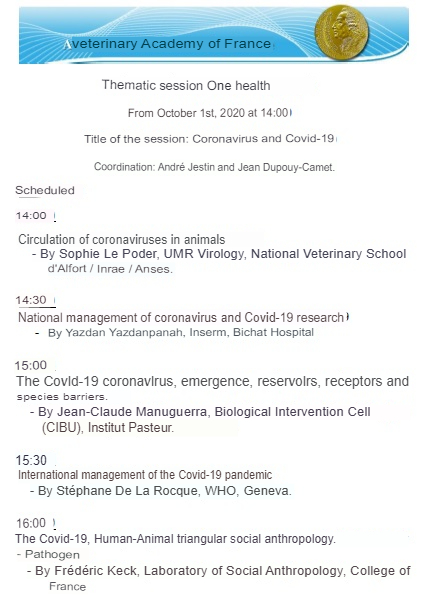
In this 2020 Session of the Veterinary Academy of France, entitled “Coronavirus & Covid 19,” we can see Dr Stéphane de la Roque, Team Leader of the One Health Team’s Country Emergency Preparedness and IHR at the Word health Organisation (WHO), together with ANRS Director General, Prof. Yazdan Yazdanpanah, discussing the need for a global “One Health” system.
I therefore submit the idea that One Health has played and will keep on playing a strategic role in the context of the WHO’s International Health Regulations (IHR), and therefore in the handling of the COVID 19 pandemic, and of course in all future pandemics. All this points inevitably in the direction of the proposed WHO Pandemic Treaty and the IHR reforms currently under negotiation at the European Council and at the WHO, where One Health will provide the working framework for a new layer of global governance.
We recall a special session of the World Health Assembly (WHA), which was convened in late 2021 to consider developing a WHO convention, agreement or other international instrument, on pandemic preparedness and response, and a so-called ‘Pandemic Treaty’. Consideration was given to this treaty as well as to reform of the International Health Regulations (IHR) as the principal governing instrument empowering the WHO even further in supposedly preventing and mitigating future pandemics. This is just another “Carte Blanche” power for the WHO and its well known sponsors such a Bill Gates and others, to abuse nations’ sovereignty and bypass their democratic processes in order to impose a centralised, top-down global ‘public health’ regime.
In the following document (the first page is translated in English) you will find the declaration by Prof. Yazdan Yazdanpanah about the potential conflict of interest with pharmaceutical companies. The original document is available here but can also be fund on the Website of the French Ministry of Health here.
In the picture below, the GloPID-R chair Prof. Yazdan Yazdanpanah and WHO DG Dr Tedros Adhanom Ghebreyesus can be seen together at the opening of the Global research & innovation forum. Prof Yazdanpanah is also an expert at the World Health Organisation (WHO), the guy is everywhere.
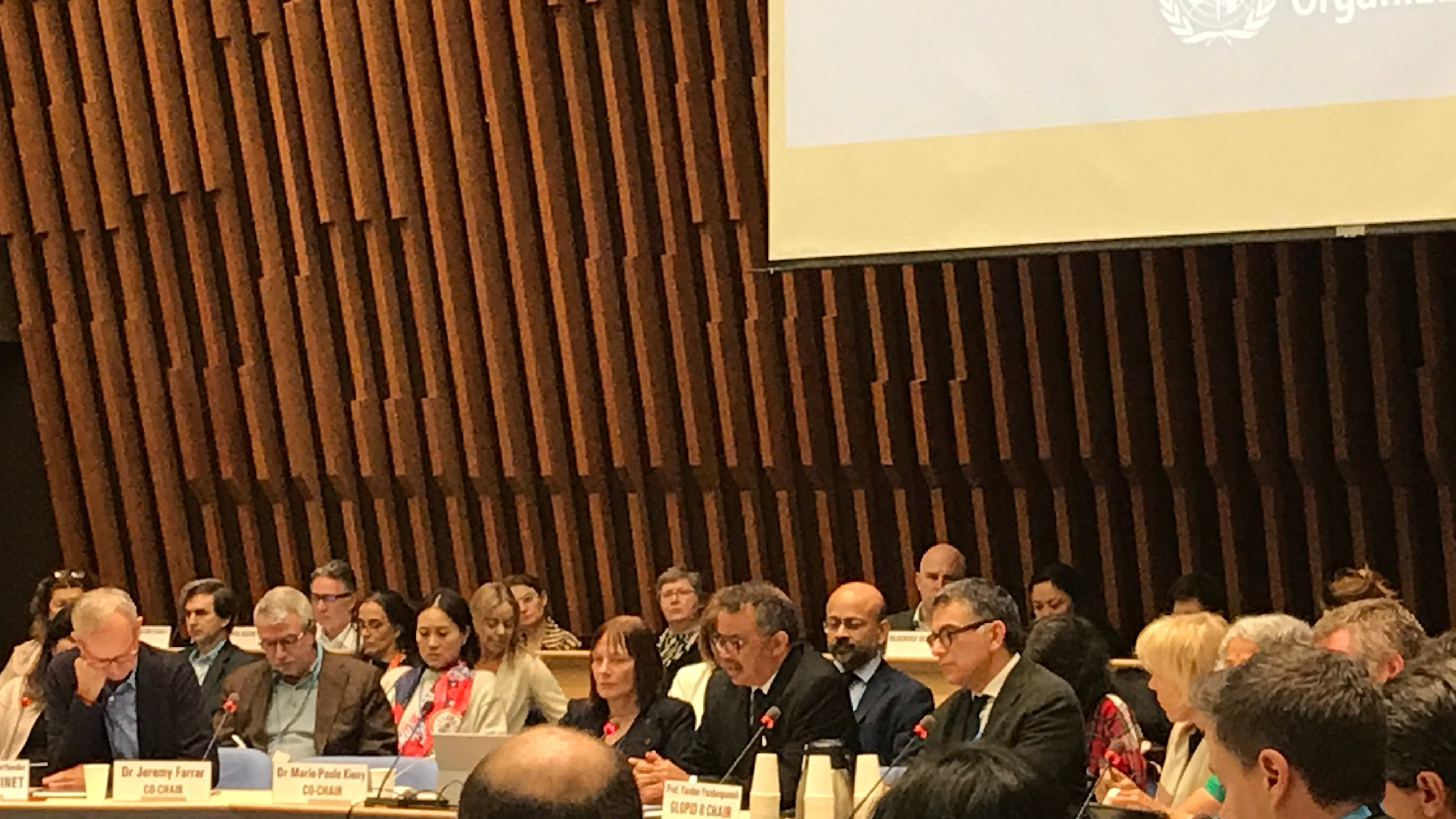
Since its creation in 2013, GloPID-R, an international network of major research funding organizations created to facilitate a rapid and effective response to infectious disease outbreaks, has steadily increased its membership. Today, it consists of 32 members worldwide. Gates-funded organisations like the World Health Organization, the Coalition for Epidemic Preparedness Innovations (CEPI), along with the European & Developing Countries Clinical Trials Partnership (EDCTP), are also actively engaged in the network.&