Select date

Heritage Practices of Small Farmers vs. “Fake Climate Change Agenda” Controlled by Big Business


All Global Research articles can be read in 51 languages by activating the Translate Website button below the author’s name.
To receive Global Research’s Daily Newsletter (selected articles), click here.
Click the share button above to email/forward this article to your friends and colleagues. Follow us on Instagram and Twitter and subscribe to our Telegram Channel. Feel free to repost and share widely Global Research articles.
***
In the middle of several increasing problems of food and farming sector, one reassuring aspect is that the various solutions do not conflict with each other and hence all the problems can be resolved simultaneously by adopting the right policies.
This becomes clearer by looking at the most desirable priorities and accompanying policies for the food and farm sector:
- production of healthy, nutritious and safe food on farms,
- its processing only in those ways which maintain health, safety and wholesome nutrition in natural ways without harmful additives,
- protection of soil, maintaining and improving its organic content and porosity to conserve water,
- conserving water, providing protective irrigation but at the same time avoiding excessive, wasteful irrigation and also avoiding commercial crops which are too water-intensive for any region,
- protecting earthworms and micro-organisms which improve soil and water conservation, protecting all friendly insects, bees, birds and pollinators and maintaining balance of nature in the local environment in which even spiders, owls and vultures play their useful roles,
- ensuring sustainable, healthy, creative and satisfactory livelihoods to all those who select food production and processing as their part-time or full time livelihood,
- maximizing the potential of local, village-based cottage and small-scale food processing,
- regulation of food trade in such a way that firstly farmers and secondly cottage and small food processors (the two activities can also be combined in the same farm family or farm unit) get the bulk of the retail price that is realized while traders get a smaller but fair share,
- farming technology should be made as self-reliant as possible in terms of using maximum of local resources while at the same time input costs for farmers should be minimized,
- the use of fossil fuels, whether in the form of chemical fertilizers, pesticides, diesel etc. should be minimized and no subsidy should be given specifically for this,
- all subsidies should be given directly to all small and medium farmers, and these should be the highest for those adopting the most ecologically protective policies and producing the most healthy, safe and wholesome nutritious food,
- all small and medium farmers who produce safe, healthy and nutritious food should be ensured a fair price for this, with a lot of this being purchased right within the village by government procurement agencies for supplying to local nutrition schemes and public distribution system of the village as well as of nearby towns as well as buffer stock storages,
- the concept of minimizing food miles should be carefully followed,
- as far as possible at least some farmland should be found for all landless rural families keen to cultivate it, and kitchen gardens for all should be promoted,
- those landless households who still cannot get some farmland in the village should be involved in community efforts, supported by the government, of using vacant land in or near the village for growing a mix of indigenous tree species providing fruits, dry fruits, fodder, medicines, oilseeds or edible oil etc. and they should get rights over this land ,
- Farm animals should be well provided for and enough healthy fodder and oilcakes should be produced at the village level for them, more attention should also be given to having better pastures,
- growing a wide diversity of crops and crop varieties in harmonious mixed farming systems ( including trees) and crop rotations, giving topmost priority to local food and nutrition needs while also protecting and conserving a wide diversity of indigenous seeds and varieties.
Such a listing can certainly be expanded but this gives a good idea of desirable priorities. Being more familiar with conditions of India, this writer has expressed a vision more in the context of India, but surely a lot of this would be relevant in several other countries too.
These priorities and policies taken together have two very remarkable features. Firstly, as pointed out earlier, all these policies and priorities are mutually consistent towards each other and can happily co-exist. Generally these are also supportive towards each other, and there is certainly no conflict or contradiction among them.
This is because these are integral parts of a comprehensive thinking which seeks to bring together concerns of justice, peace, health and nutrition of all people, sustainability, protection of environment and of all forms of life, when applied to the food and farming sector.
Secondly, a no less remarkable aspect is that while all these priorities and policies were very desirable before climate change became a big issue, exactly the same policies and priorities have become even more relevant in the context of the very pressing need for climate change mitigation and adaptation.
Whether in terms of reducing greatly the use of fossil fuels, or of absorbing of carbon dioxide, the comprehensive mix of policies and priorities (which can also be called heritage practices as a result of having evolved from the wisdom of several generations of farmers) which have been good for health and nutrition, for soil and water conservation, for justice and equality, are also found to be equally good for climate change mitigation and adaptation.
Hence what climate change mitigation and adaptation in the context of farming and food involves is what several generations of farmers had already known well but had been discarding in recent times under the increasing impact of big business interests.
Hence climate change mitigation and adaptation is very significantly also a process of getting rid of undesirable, imposed impacts and influences of big business interests whose main aim has been to advance their profits, control and domination of this sector while increasing fossil fuel use, pollution, monocultures, overexploitation of water and soils, loss of diversity of traditional seeds, uprooting of time honored mixed farming systems and crop rotations, indebtedness and land loss among small farmers.
Despite such a widely documented record, big business interests are now demanding that they should be given the leadership role in climate change mitigation and adaptation in the context of this sector, so that they can heavily distort the entire agenda to make it even more suitable for even higher levels of their profits and control.
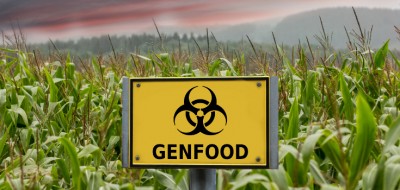
This is the main threat that exists today in the food and farming sector– of the entire agenda of desirable changes getting distorted by big business interests armed with highly disruptive technologies like that of GM crops. This threat should be widely opposed.
*
Note to readers: Please click the share button above. Follow us on Instagram and Twitter and subscribe to our Telegram Channel. Feel free to repost and share widely Global Research articles.
Bharat Dogra is Honorary Convener, Campaign to Save Earth Now. His recent books include India’s Quest for Sustainable Farming and Healthy Food, Man over Machine and When the Two Streams Met. He is a regular contributor to Global Research.