Select date

“Stop the dump”: Pacific Communities Protest Japan’s Release of Nuclear Treated Water


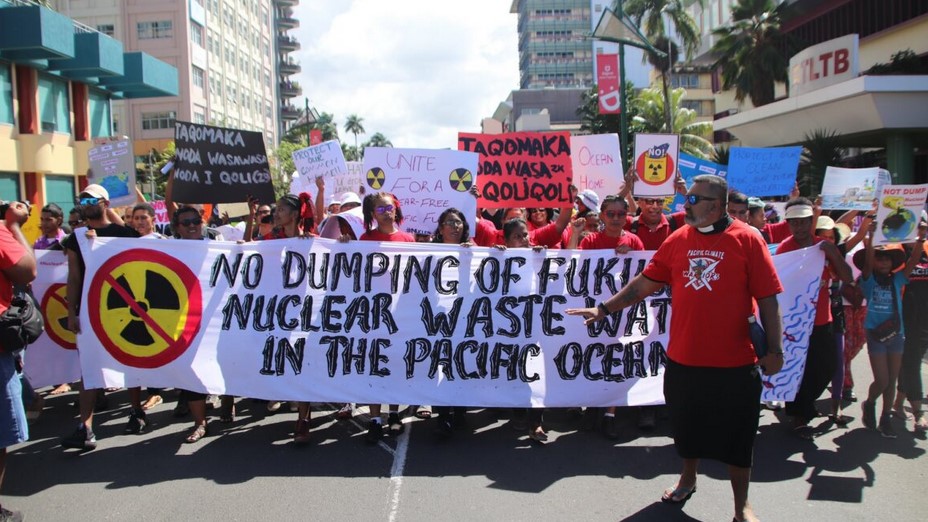
Protests were organized across the Pacific region after Japan started releasing treated water from the decommissioned Fukushima nuclear plant into the Pacific Ocean.
In March 2011, an earthquake and tsunami resulted in a nuclear disaster at the Fukushima Daiichi nuclear power plant which contaminated the groundwater with radioactive materials. This water has been collected, treated, and stored onsite since 2011.
Since 2021, the Tokyo Electric Power Company (TEPCO) has been preparing the infrastructure for the “safe” release of Fukushima’s treated water through a process called the Advanced Liquid Processing System (ALPS). The Japanese government has approved the plan but various stakeholders raised alarm about its impact not just in Japan but also in the Pacific region.
On August 24, Japan started discharging treated water amid lingering concern about the damage it may cause. TEPCO explained the process of releasing the water which will take place over the next three decades:
During the initial stages of sea discharge, a very small amount will be carefully discharged using a two-step process.
Firstly, as Stage 1 of the initial discharge of ALPS treated water, today, a very small amount of ALPS treated water will be diluted with seawater and stored in the vertical discharge shaft (upstream water tank) in order to verify that ALPS treated water is being diluted as planned. After this stored water has been sampled and tritium concentrations measured, we will move on to Stage 2, continuous discharge into the sea on and after August 24.
The International Atomic Energy Agency (IAEA) has been monitoring the preparation of TEPCO and it released a report noting the “negligible” impact of the treated water on the environment.
IAEA concluded that Japan’s approach and activities to discharge ALPS-treated water are consistent with relevant international safety standards. The report noted that the controlled, gradual discharges of the treated water to the sea, as currently planned and assessed by TEPCO, would have a negligible radiological impact on people and the environment.
The Pacific Islands Forum, the official group of Pacific governments, said that it will continue its engagement with Japan for more information and transparency, although it is divided on whether it will support or reject the release of treated water.
Activist Post is Google-Free
Support us for just $1 per month at Patreon or SubscribeStar
But for Pacific environment groups, the dumping of treated water is tantamount to destroying marine life and the future of the region. Justice Pacific’s statement reflects this popular sentiment among non-government organizations:
The implications of Japan’s decision to dispose of nuclear waste water in such a manner are far-reaching and potentially catastrophic. It not only poses a severe threat to marine life and ecosystems but also raises serious concerns about the health and safety of Pacific communities that depend on these waters for their livelihoods and sustenance.
It was a sea of colors as people, young and old showed up in numbers to be part of today's Anti-Fukushima Nuclear Waste Water March in the heart of Suva to Albert Park.
Access more images here: https://t.co/umrSPZQ1sV#


