Select date

Beethoven’s 9th Symphony. Confronting the “Ugly Sounds” of Corrupt Politicians


All Global Research articles can be read in 51 languages by activating the Translate Website button below the author’s name.
To receive Global Research’s Daily Newsletter (selected articles), click here.
Click the share button above to email/forward this article to your friends and colleagues. Follow us on Instagram and Twitter and subscribe to our Telegram Channel. Feel free to repost and share widely Global Research articles.
***
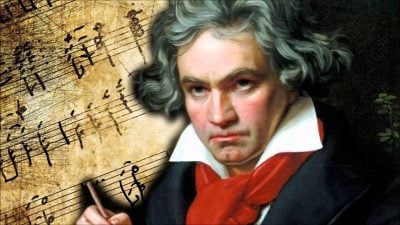
Ludwig van Beethoven’s 9th Symphony’s first performance was in Vienna in May 1824 at the Kaiserliches Hoftheater am Kärntnertor
The 9th Symphony is considered as a powerful symbol of solidarity, social equality, peace and human values.
But there is something else, which has been ignored by musicologists and historians of music:
Beethoven added three extra verses –coupled with corresponding musical pitches– which were not contained in Friedrich von Schiller’s original “Ode to Joy”:
Oh friends, not these sounds!
O Freunde, nicht diese Töne!
But let us sing more pleasantly
Sondern lasst uns angenehmere anstimmen
And more joyful ones!
Und freudenvollere!
These three verses were sung right at the beginning, they were followed by
Freude!
Freude!
Freude schoener Goetterfunken
Tochter aus Elysium
…
Dear Readers, we suggest you listen carefully to the 4th movement.
Three verses were inserted (in musical phrases) at the outset of the 4th movement (O Freunde, nicht diese Töne!). What is Beethoven’s message to humanity??
O Freunde, nicht diese Töne! Oh friends, not these sounds! Sondern lasst uns angenehmere anstimmen, But let us sing more pleasantly
which in substance means: Friends, get rid of all those “ugly sounds”
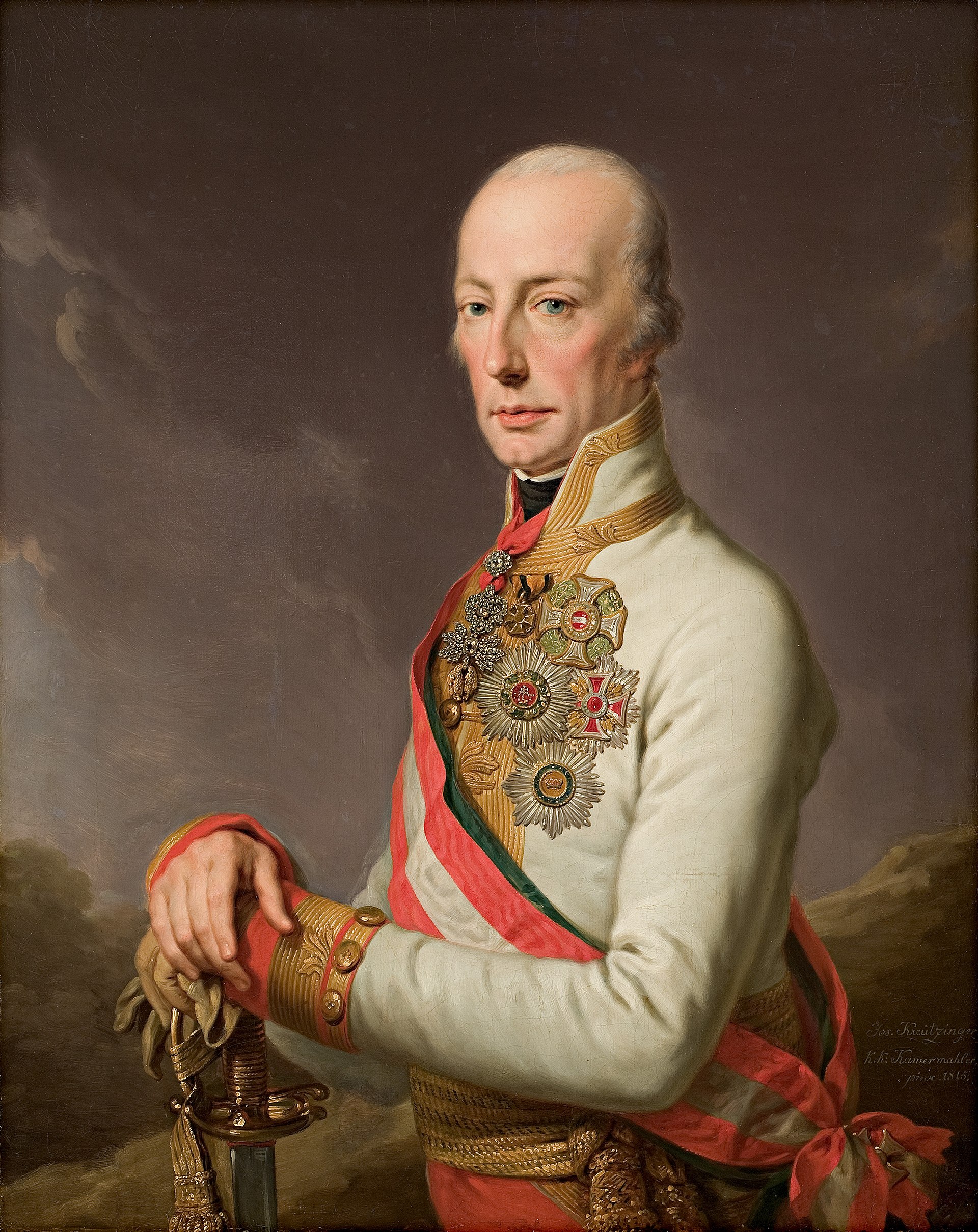 Was Beethoven’s intention to “bypass censorship” while expressing in the lyrics and melodies the true nature of these “ugly sounds” which in Vienna in the year 1824 consisted in the derogation of peace and fundamental human rights at the height of the Austrian Empire under Kaiser Franz I (1804-1834)
Kaiser Franz I (image left)
This was during the “Metternich Period”, which was marked by social repression and “empire building”.
Was this not a subtle message within Beethoven’s musical brilliance to the socially repressive regime of the Austrian Empire which at the time was under the helm of State Chancellor (Prince) 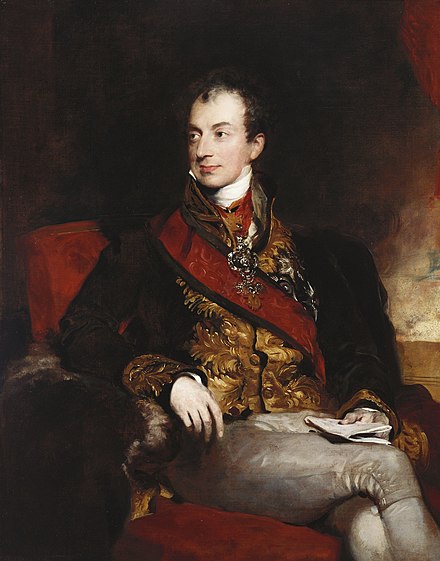 Klemens von Metternich?
Klemens von Metternich (image right)
There are (unconfirmed) reports that Metternich and Beethoven knew each other. Metternich was present at Beethoven’s funeral three years later in 1827.
While Friedrich Schiller’s Ode to Joy is considered Worldwide as a message to all mankind: “living in peace and harmony together”:
these three verses added by Beethoven should be remembered as a “Symbol of Resistance”
The Choral starts at about 6.00 with the first three verses (which are indicated in German on the screen of the first video).
The second video featuring the 9th Symphony was recorded in Berlin
The full lyrics in German and English are indicated below at the foot of the article
Flash Forward to the 21st Century
Today, at the outset of the 21st Century, Europe’s “Classe politique” is once again committed to sustaining the “ugly sounds” of a social order marked by corruption, fraud and social divisiveness.
The music of Beethoven’s 4th Movement was embedded in the EU-Anthem. The poem by Friedrich von Schiller was not used.
Beethoven’s first three verses of the Ode to Joy. A Symbol of Resistance
Let us recognize Beethoven’s Ninth Symphony as a symbol of resistance, which in the contemporary context should be used to address the numerous “ugly sounds” of the World Economic Forum’s Great Reset, coupled with “Shock Treatment” and the Neoliberal agenda, which is endorsed by corrupt politicians, leading to the impoverishment of millions of people Worldwide.
O Freunde, nicht diese Töne! But let us sing more pleasantly
Sondern lasst uns angenehmere anstimmen And more joyful ones!
Und freudenvollere!
Freude (Freude) joy (joy)
Freude (Freude)
Freude, schöner Götterfunken Daughter from Elysium
Tochter aus Elysium We enter, drunk with fire
Wir betreten feuertrunken Heavenly ones, your sanctuary!
Himmlische, dein Heiligtum! Your spells bind again
Deine Zauber binden wieder What fashion strictly divided
Was die Mode streng geteilt all people become brothers
Alle Menschen werden Brüder Where your gentle wing rests
Wo dein sanfter Flügel weilt
Wem der grosse Wurf gelungen To be a friend’s friend
Eines Freundes Freund zu sein Whoever has won a devoted wife
Wer ein holdes Weib errungen Interfere with his cheers!
Mische seinen Jubel ein! Yes, whoever has a soul
Ja, wer auch nur eine Seele Being calls on the face of the earth!
Sein nennt auf dem Erdenrund! And those who have never been able to do so, steal
Und wer’s nie gekonnt, der stehle Crying out of this bond
Weinend sich aus diesem Bund
Freude trinken alle Wesen At the breasts of nature
An den Brüsten der Natur All good, all bad
Alle Guten, alle Bösen Follow her trail of roses
Folgen ihrer Rosenspur She gave us kisses and vines
Küsse gab sie uns und Reben A friend tested in death
Einen Freund, geprüft im Tod pleasure was given to the worm
Wollust ward dem Wurm gegeben And the cherub stands before God!
Und der Cherub steht vor Gott!
Michel Chossudovsky, September 21, 2023