Select date

Ivermectin Has at Least 15 Anti-cancer Mechanisms of Action. Can It Treat COVID-19 mRNA Vaccine-Induced Turbo Cancers?


All Global Research articles can be read in 51 languages by activating the Translate Website button below the author’s name.
To receive Global Research’s Daily Newsletter (selected articles), click here.
Click the share button above to email/forward this article to your friends and colleagues. Follow us on Instagram and Twitter and subscribe to our Telegram Channel. Feel free to repost and share widely Global Research articles.
***
Papers reviewed:
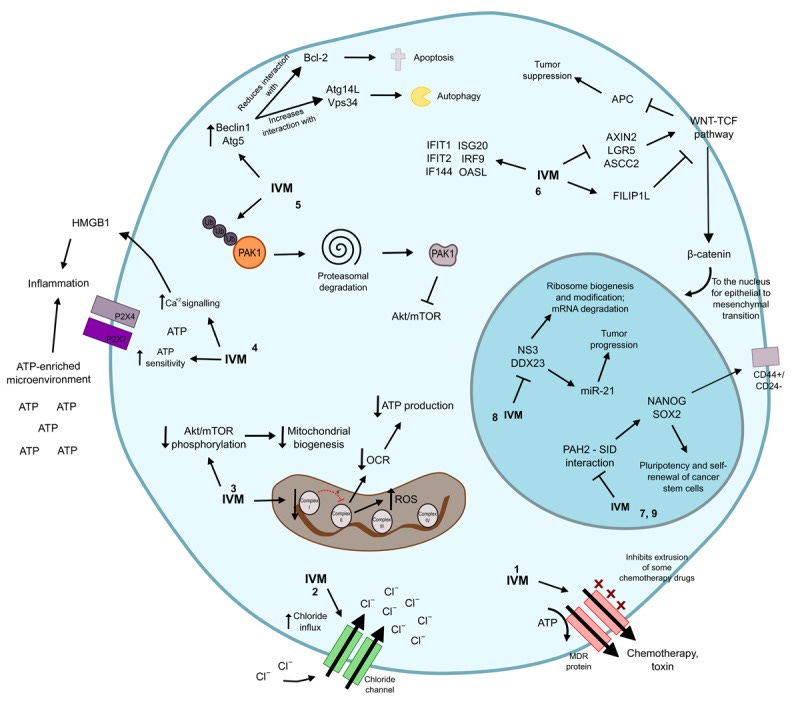
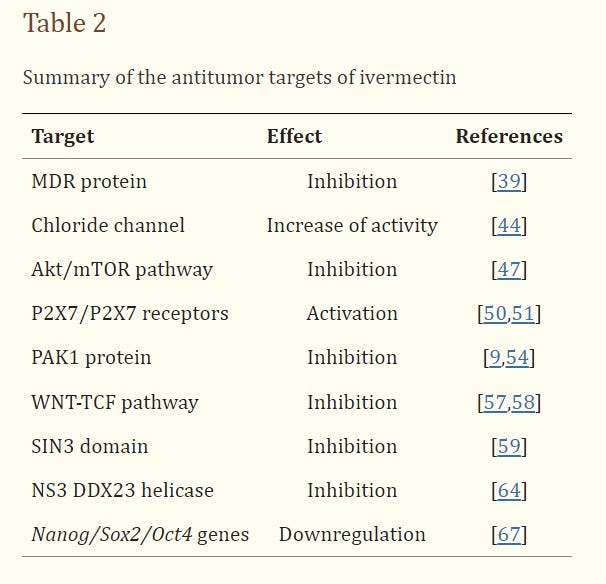
What this means clinically:
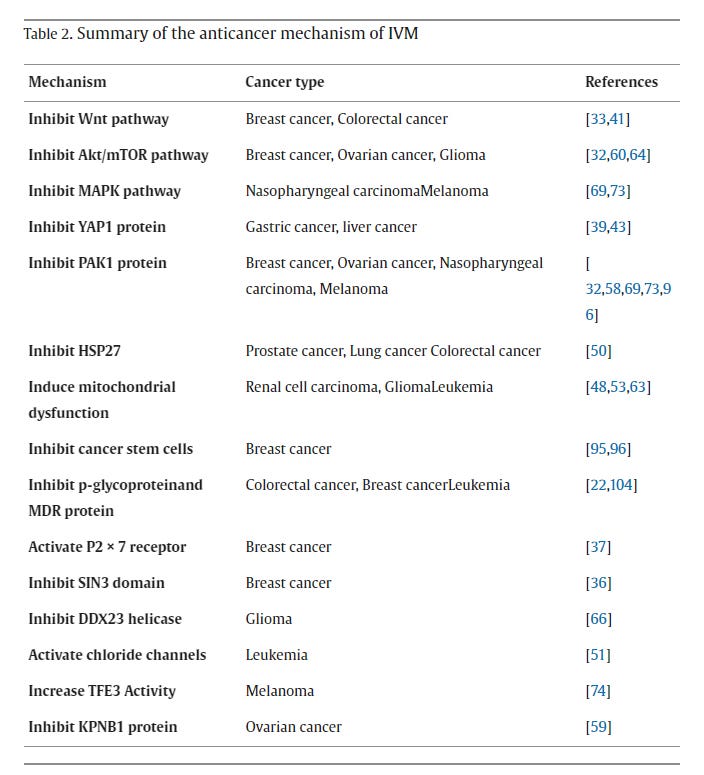
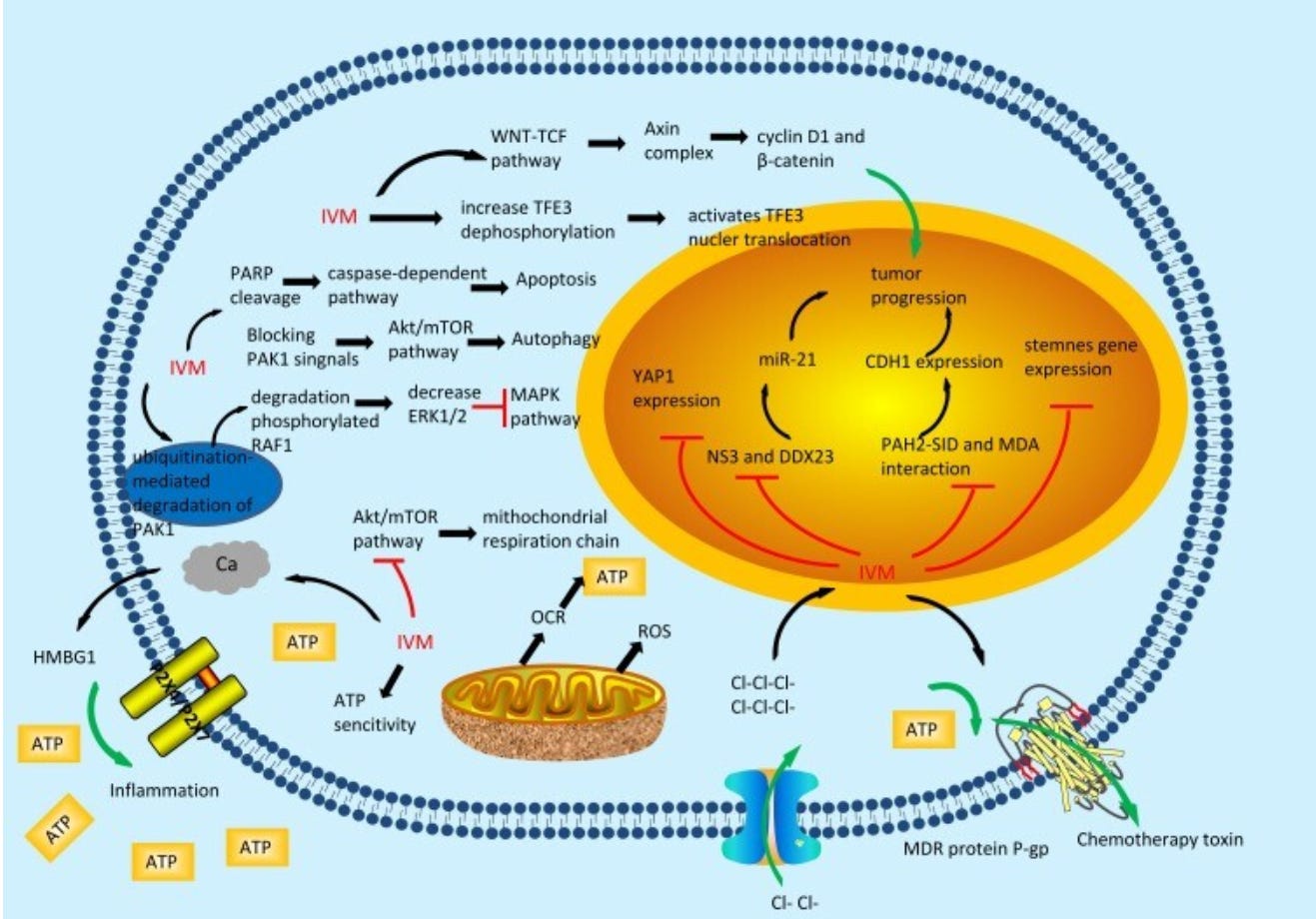
- Chloride channel – Acute myeloid leukemia – induced cell death
- Akt/mTOR path – glioblastoma, renal cancer cell lines – inhibition of mitochondrial biogenesis or function, oxidative stress, DNA damage
- P2X7 (ICD) overexpression promotes tumor growth and metastases – ivermectin potentiates immunogenic cell death (ICD) in triple negative breast cancer cells
- PAK1 (Autophagy) – glioblastoma and ovarian cancer cell lines – Ivermectin promotes autophagy through this pathway
- WNT-TCF pathway – glioblastoma, colon cancer, melanoma – Ivermectin exerts anti-proliferative function through this pathway (possibilities to use Ivermectin to block WNT-TCF dependent cancers like breast, skin, lung)
- SIN3 Domain – breast cancer (Ivermectin acts as epigenetic modulator to alter gene expression and decrease tumor growth)
- NS3 helicase – glioma cells – Ivermectin had anti-tumor effects by acting as helicase inhibitor
- CONCLUSIONS: Ivermectin selectively inhibits the proliferation of tumors at a dose that is not toxic to normal cells and can reverse the MDR (multi-drug resistance) of tumors.
- In healthy volunteers, the dose was increased to 2 mg/kg, and no serious adverse reactions were found
- Unfortunately, there have been no reports of clinical trials of IVM as an anticancer drug
- large number of research results indicate that IVM affects multiple signaling pathways in tumor cells and inhibits proliferation, IVM may cause antitumor activity in tumor cells through specific targets
- Ivermectin regulates the tumor microenvironment, inhibits the activity of tumor stem cells and reduces tumor angiogenesis and tumor metastasis.
- It has become increasingly clear that Ivermectin can induce a mixed cell death mode involving apoptosis, autophagy and pyroptosis depending on the cell conditions and cancer type.
- Ivermectin can enhance the sensitivity of chemotherapeutic drugs and reduce the production of resistance. Therefore, IVM should be used in combination with other drugs to achieve the best effect
In humans, toxicity of ivermectin is very low, no serious adverse reactions have been found in healthy volunteers at dose up to 120 mg (~2 mg/kg) (Reference: GuzzoCA, FurtekCI, PorrasAG, et al. Safety, tolerability, and pharmacokinetics of escalating high doses of ivermectin in healthy adult subjects. J Clin Pharmacol. 2002;42(10):1122–1133.)
Ivermectin exerts anti-cancer effects through at least 15 different pathways proven in the medical literature, both in vitro and in vivo!
(You get a nice summary of these 15 pathways from the 2021 paper by Mingyang Tang et al.)
First, let’s quickly summarize the anti-cancer mechanisms (a quick summary can be found in 2022 paper by Loftalizadeh et al):
There is almost no literature on Ivermectin and lymphomas which are probably the most common COVID-19 mRNA vaccine turbo cancers – this must be investigated.
What Dose of Ivermectin to Treat COVID-19 mRNA Vaccine Turbo Cancer?
- Guzzo et al published a paper in 2022 on the “Safety, tolerability, and pharmacokinetics of escalating high doses of Ivermectin in healthy adult subjects”
- The highest dose tested to be safe with no side effects, was 2 mg/kg.
- Max concentration in plasma is 4 hours after oral intake
- Half life is 18 hours
- Dr.David E. Scheim PhD, Blacksburg VA also wrote an interesting article on Ivermectin Safety in Sep.7, 2021 (Source)
- Several studies have shown that Ivermectin’s anti-cancer effects are DOSE-DEPENDENT (higher dose = better response)
Also mentioned is a “High Dose Ivermectin” regimen of 2mg/kg per day for a doctor with Stage 4 Gallbladder cancer, taken for over a year, with visual side effects for a few days initially which resolved.
Also described is a case of enlarged Prostate suspicious for cancer, and a 5 week Ivermectin 45mg/day regimen that dropped PSA from 89.1 to 10.9 with resolution of nocturnal urinary frequency. For a 100kg man, that is a dose of 0.45mg/kg, significantly lower than the 2 mg/kg safe dose published by Guzzo et al.
The article describes a cancer patient with a neck tumor and lung metastases on a High Dose Ivermectin regimen of 2.45mg/kg daily.
I believe that it is a reasonable hypothesis that COVID-19 mRNA Vaccine Turbo Cancer patients could benefit from High Dose Ivermectin regimens, such as 2mg/kg and we urgently need more research to be done in this area.