Select date

History of Nazism in Ukraine: 1944-1963


All Global Research articles can be read in 51 languages by activating the Translate Website button below the author’s name.
To receive Global Research’s Daily Newsletter (selected articles), click here.
Click the share button above to email/forward this article to your friends and colleagues. Follow us on Instagram and Twitter and subscribe to our Telegram Channel. Feel free to repost and share widely Global Research articles.
***
Read Parts I and II:

The History of Nazism in Ukraine: The Organization of Ukrainian Nationalists (OUN), 1917-1941
By , September 30, 2023

History of Nazism in Ukraine: The OUN during World War Two, 1941-1945
By , November 08, 2022
Introduction
Just prior to the Russian invasion of Ukraine in 2022, stories began to appear in the Western press on American plans to set up a GLADIO style stay behind network in Ukraine that would resist the Russian invasion from behind enemy lines. It would be an underground army equipped with hidden arms caches. Unsurprisingly this meant that such a Gladio terror network had already been set up. However in the context of the bloody stalemate that the war has become it has been so far only a minor annoyance for the Russians, assassinating officials in Russian controlled areas and helping to target Ukrainian attacks. These plans were history repeating themselves for as the Nazis prepared to retreat from Ukraine back in 1944 they made a deal with the UPA (Ukrainian Insurgent Army) to act as a stay behind army to continue to wage war on the Soviets from behind enemy lines.
History: Organization of Ukrainian Nationalists (OUN)
The UPA had been created to ethnically cleanse eastern Poland of Poles and the few remaining Jews who had survived the mass killings throughout the occupied territories. It pretended to fight the Nazis while secretly working for German military intelligence. Yet the UPA and their OUN/B (Organization of Ukrainian Nationalists/Bandera) masters knew that Germany was losing the war and in mid-1944 the head of OUN/B intelligence the SB Mykola Lebed made a secret deal with the British.
Soon the Americans were also in on the act. In Ukraine, World War 2 would go on for another eight years after the defeat of Nazi Germany.
The campaign against the Soviet Union would continue to be waged by OPC, MI6, Gehlen Org, and the CIA who secretly backed the doomed UPA.
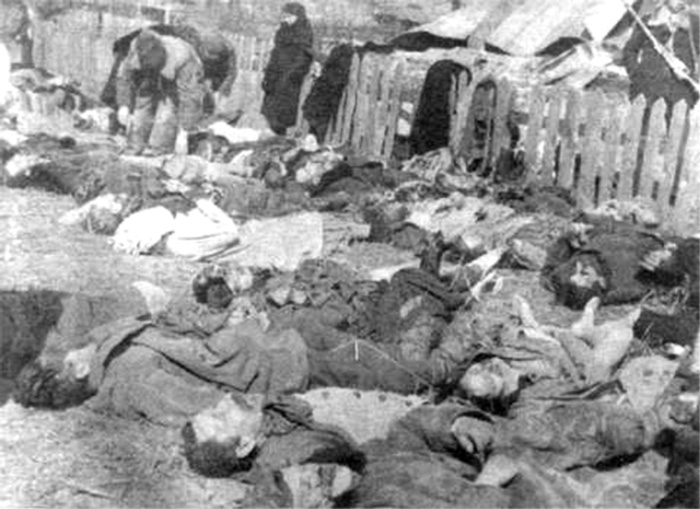
Polish victims of a massacre committed by UPA in the village of Lipniki, 1943 (Licensed under the Public Domain)
And Ukraine was merely the biggest of these Western backed covert wars that are usually completely ignored by mainstream accounts of the Cold War. The UPA war itself took place in Poland, Belarus, and Czechoslovakia as well as Western Ukraine. There were also covert wars in Poland, Latvia, Lithuania, Estonia, Albania, Yugoslavia and other countries in the Eastern Bloc. In the Baltics, remnants of the Waffen SS, known as “The Forest Brotherhood”, continued the war with the backing of combined Western intelligence services.
The UPA campaign in Ukraine was fundamental in the start of the Cold War. OUN-UPA propaganda promised that World War 3 was just around the corner and that Britain and America would arrive to “liberate” Ukraine and deliver it to the OUN/B—a bunch of genocidal fascists. In exchange for Western arms, the UPA were spying for the West. Their information was being used to pick targets inside Ukraine for the planned U.S. atomic “Doomsday” strikes. Living in Western exile, future OUN/B head Yaroslav Stetsko was actively lobbying for atomic war at the expense of millions of Ukrainian dead. He considered this a small price to pay for the “liberation” of Ukraine from Communism.
From World War I to the Early Cold War Years
This article will tell the story of these early Cold War years. It will cover the UPA war, the ratlines and the resettling of 120,000 Ukrainian fascists around the globe. It will discuss riots, torture and assassination that the OUN/B conducted in displaced person camps and prisons. It will discuss the OUN/B in exile and its split into two factions: the MI6 and Gehlen backed Zch OUN led by Stepan Bandera and Stetsko and the CIA backed ZP UHVR led by Mykola Lebed. It will cover the OUN/B and MI6 creation of the largest fascist umbrella group of the postwar years the Anti-Bolshevik Bloc of Nations or ABN which united escaped fascist war criminals from across Eastern and Central Europe.
The ABN would form close ties with the Asian People’s Anti-Communist League and the two would eventually launch the World Anti-Communist League. Finally it will discuss the assassination of Stepan Bandera.
You should read parts one and two for a detailed account of the origins of the OUN and its role in helping the Nazis murder masses of Slavs and Jews during World War 2.
However I will attempt a recap along with a couple of new details discovered in my many months of research since last year.
For much of its history Ukraine has been a battleground between East and West. In the nineteenth century, a Ukrainian national identity began to emerge in a small group of artists and intellectuals. The stereotypical early Ukrainian nationalist had a book of Ukrainian poetry in one pocket and a copy of Marx in the other. In the years leading up to World War 1 however, Ukrainian nationalism increasingly became a form of proto-fascism inspired by scientific racism and social Darwinism.
Its key figure would become Dmytro Dontsov who fled Russian Ukraine for Galicia, which was part of the Austro-Hungarian Empire. (It may be worth mentioning that the collapse of the Austro-Hungarian Empire released the flood of reactionary intellectuals that also built the atomic bomb, the so-called Chicago School, neo-conservatism, and neo-liberalism.)
Donstov would become a propagandist for Germany during World War 1. Ukraine would become a major battleground in World War 1, the Russian Civil War, the Polish-Soviet War, and the Polish-Ukrainian war. In the end most of Ukraine would be incorporated into the Soviet Union as the Ukrainian Soviet Socialist Republic while what is today Western Ukraine became part of Poland. Historians have come to realize that the German (and Czech) wartime experience fighting in Ukraine and the Baltic in the wake of the Bolshevik Revolution played a key role in the birth of Nazi ideology and methodology.
This is known as “Brutalization theory”. Anti-communism and anti-Semitism became linked and led to genocidal pogroms. German veterans of the wars in the Ukraine and the Baltic would join the Freikorps which were right wing mercenary and paramilitary bands. The Freikorps popularized the swastika, fought wars in Eastern Europe, were brought in to massacre German communists and joined the Nazi Party.
The Organization of Ukrainian Nationalists or OUN had its origins in what was Eastern Poland after World War 1. During World War 1 the OUN’s founders had fought for the Austro-Hungarian Empire as the Sich Riflemen serving under a Habsburg prince Wilhelm von Habsburg. They became the core of the military for the short-lived Western Ukrainian People’s Republic, which was eventually crushed by the newly reborn Poland. They then went into exile and formed the terrorist group, the UVO, which stood for the Ukrainian Military Organization.
The UVO carried out terror attacks in Poland and spied for German military intelligence. The UVO was headed by Levhen Konovalets who had commanded the Sich Riflemen and then fought for Western Ukraine against Poland. Defeated, he and the other leaders ran the UVO from exile. In 1929 the UVO decided it needed a mass organization to carry out its goals and created the OUN. Konovalets was the first head of the OUN.
Meanwhile in Western Ukraine, a new generation of Ukrainian nationalists had come of age inspired by the work of Dmitry Dontsov who popularized fascism. Dontsov was surrounded by a group of fascist avant-garde poets and intellectuals known as the Vistnykites. Donstov popularized a bastardized form of Nietzsche, which he combined with extreme Ukrainian nationalism. He inspired a ruthless young generation of Ukrainian fascists who worshipped violence and were ready to commit any crime for the sake of the cause.
The Bandera Generation
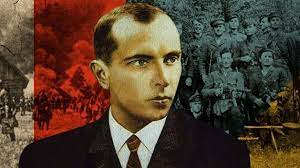 Historians call them the “Bandera Generation” which included Stepan Bandera, Yaroslav Stetsko, and Mykola Lebed. They grew up in nationalist youth groups and scouting organizations before joining the UVO and then the OUN. They managed to radicalize much of the Ukrainian population of Poland launching a movement of mass resistance, propaganda, fanatical indoctrination, terror and assassination. Eventually after plotting the assassination of the interior minister of Poland Bronislaw Pieracki, the OUN leaders were tried and imprisoned. The actual assassin escaped to Argentina where the FBI later uncovered a German plot to have him assassinate President Franklin Delano Roosevelt.
Meanwhile Levhen Konovalets, the leader and founder of the OUN/B, was assassinated by Pavel Sudoplatov, a Soviet agent using an exploding box of chocolates. The OUN leadership in exile picked Andrii Melnyk to replace Konovalets. When Germany invaded Poland, sparking World War 2, Bandera and his friends escaped from prison. Bandera’s trial had made him a superstar among the Ukrainian nationalists and he felt he should be made OUN leader.
The OUN was soon split into an older generation in exile, the OUN/M, loyal to Melnyk, and the younger OUN/B living under Polish rule and loyal to Bandera. The OUN/M vs. OUN/B rivalry would turn murderous. Both competed for the Nazis’ favour and both would play their role in helping to carry out the Nazis’ genocidal policies. The OUN/B would create Ukrainian militias that would become the auxiliary police hunting, guarding and transporting to execution, Ukraine’s Jews and other enemies of the Nazis.
The 14th Waffen SS division “Galizia”
The OUN/M would supply recruits for the 14th Waffen SS division “Galizia”. In 1943, the OUN/B ordered its members in the police to desert and form the UPA the Ukrainian Insurgent Army.
The UPA launched genocidal massacres of Polish villagers. They reportedly delighted in murdering their victims with horrifying sadism using axes, clubs and saws to save bullets, terrify the Poles, and amuse themselves. The UPA killed 80-100,000 poles in Galicia and Volhynia. The UPA also helped the Nazis battle the Soviet partisans.
After the war, the OUN/B in exile would popularize the myth that the UPA fought both the Nazis and the Soviets.
In reality the UPA only attacked Germans when they needed arms and they were secretly working for the German Abwehr (military intelligence) the entire time.
The Abwehr had been working with the UVO and the OUN throughout their history.
MI6 had also been backing the OUN before the war. MI6 head Admiral Hugh “Quex” Sinclair began backing the OUN in the mid 1930s. The man in charge was MI6 officer Harry Carr stationed in Finland. Carr was also apparently working with the Abwehr. Carr would be the MI6 point man for Ukrainian operations after the war, meeting frequently with Stepan Bandera.
Early in 1944, the Red Army was on the verge of liberating Western Ukraine. The UPA and the Abwehr made a deal. Huge German arms caches were turned over to the UPA in exchange for providing intelligence on Soviet forces and fighting to tie down as many Red Army troops as they could. It was called Operation Sunflower. Shortly before the Red Army captured Lvov, the OUN/B held a major conference adopting a more democratic facade in hopes of winning Western support. This process of adopting a democratic facade had begun the year before in the OUN/B’s third Extraordinary Conference held on 21-25 August 1943.
After the spring 1944 conference, the OUN/B decided to send a delegation led by Mykola Lebed to the West to contact the Allies. Lebed would become a key Cold War figure leading the CIA backed branch of the OUN/B. The UHVR, the Supreme Ukrainian Liberation Council, was created to give a democratic facade to the OUN/B in July 1944. Lebed later admitted to historian Christopher Simpson that he had made contact with Western intelligence in the summer of 1944. Lebed was described by the American CIC (Counter-Intelligence Corps) as “A well known sadist and Nazi collaborator”.
In the 1930s, Lebed masterminded a number of assassinations. He had gone on to the Gestapo school outside of Cracow, Poland, where he trained his men in torture, by kidnapping Jews and torturing them until they made false confessions and then killing them (an approach for which USAID/ CIA contractor Dan Mitrione became infamous in Latin America). Lebed headed the OUN’s intelligence branch the Sluzhba Bezpeky (Security Service) or SB, which was also tasked with killing, suspected traitors within the OUN/B or the UPA.
Lebed masterminded the assassinations of OUN/M members that got Bandera and Stetsko sent to the cozy section of the concentration camp for high value political prisoners.
Unlike Bandera, Lebed was thus able to participate directly in the OUN/B’s horrific war crimes during the war. Lebed ordered the ethnic cleansing campaign against Poles. After the Cold War, Lebed and his CIA front Prolog would be credited with helping to destabilize and destroy the Soviet Union. Most historians claimed that Lebed’s initial mission to contact the Western allies in 1944, was a failure. However, historian Jeffrey Burds discovered that according to German intelligence it was a success and by the fall of 1944 Lebed had made a deal with the British.
Lebed also found a willing ally in the Vatican through the Ukrainian-American archbishop Ivan Buchko, a prelate in the Greek Catholic church and a native of Pittsburgh, Pennsylvania. Buchko would later intercede with Pope Pius XII to protect the Ukrainian 14th Waffen SS “Galizia” division. Another key Lebed ally in the clergy was Father Ivan Hryn’okh who had been the chaplain to the Galizia division.
Meanwhile, the Soviets had succeeded in liberating Ukraine in May 1944 and the UPA war had begun. The Red Army still had to liberate the rest of Eastern Europe and eventually Germany.
The bulk of Red Army forces left Ukraine after drafting 700,000 West Ukrainians. Still at one point the UPA managed to tie down about 200,000 Red Army troops. It even managed to kill General Nikolai Vatutin of the 1st Ukrainian Front in February 1944. Between February 1944 and December 1946 the UPA managed to kill 11,725 Soviet officers, agents, and collaborators.
The UPA wounded 3,914 more and 2,401 were disappeared (kidnapped), probably tortured and then killed. Soviet officials were afraid to leave their offices. Meanwhile being elected to head a village soviet usually meant a death sentence for whoever won. The UPA ruled the countryside. The UPA foolishly tried to fight the Red Army and the NKVD head on in the first year of the war and suffered huge casualties. To avoid confusion, I should mention that the Soviets changed the name of their security services three times in the period this article covers.
The NKVD (People’s Commissariat For Internal Affairs), which was responsible for Internal security, became the MVD (Ministry of Internal Affairs) in 1946, a name it kept until 1991. The NKGB (People’s Commissariat of State Security) responsible for external threats became the MGB (Ministry of State Security) in 1946 and the KGB in 1954. In 1947 the Soviets became concerned by the failure of the MVD to root out the UPA and transferred responsibility for the UPA war to the MGB. The MGB and the MVD were bitter rivals involved in a constant power struggle. Khrushchev was also removed from power for several months because of his brutality and incompetence.
The UPA had prepared for the arrival of the Soviets by launching a massive propaganda campaign to get the populace to resist the draft. Rumour and disinformation were among the UPA’s weapons of choice. They claimed that the Soviets were planning to kill the entire population or deport them to Siberia. They claimed that Stalin was dead. They claimed that the U.S. was rearming Germany and Japan to launch an attack on the Soviet Union (actually true) and that the United States and Britain were about to invade on their behalf (more than unlikely).
They claimed that an army of Ukrainians from Canada or the US or made up of Ukrainians in displaced persons camps was about to come to the rescue. Some UPA rumours betrayed an inside knowledge of secret Western plans with a little exaggeration thrown in. The UPA plan to promote draft avoidance/ evasion was very successful and the forests were full of draft dodgers, potential UPA recruits. Some of these fugitives became bandits to survive.
The UPA had the peasants dig bunkers and hideouts. Some were only big enough to hide a single person while others were huge multi-room affairs. The bunkers were used to create a literal underground parallel government with hidden hospitals, printing presses and even police stations as well as hiding arms, weapons, and food. The NKVD was faced with a huge well-armed and trained UPA force that outnumbered them 6 to 1. The UPA would assassinate anyone that the Soviet government tried to put in charge of a local village and eventually anyone who obeyed the Soviets.
The NKVD decided to create destruction battalions to battle the UPA. However, since all the able bodied men were already serving in the Red Army or hiding out with the UPA in the forests, the NKVD had to rely on the old, the disabled, women and children to serve in the destruction battalions. Many joined to avenge family members killed by the UPA. They were often poorly trained. The UPA also sent its own members to infiltrate the destruction battalions, setting them up for ambushes so the UPA could steal their arms, or trying to convince them to desert to the UPA.
Eventually however, in mid-1946 the MVD would purge the destruction battalions and give them better training. The NKVD/MVD also enjoyed an advantage in raw firepower against the UPA. The UPA strategy of forming large 600 man battalions made them easy to track down. The UPA staged reckless and suicidal attacks on the NKVD units and suffered heavy casualties. By 1945 the UPA was forced to completely change their strategy–they formed small units that would carry out attacks and then disappear into bunkers or melt into the local population.
In November 1944 the Soviet-backed Polish government and Soviet Ukraine agreed on population transfers and a new border. Poles in what was once Eastern Poland and was now once again Western Ukraine, were sent to Western Poland which had been carved out of Eastern Germany while Poland would send all of its Ukrainians to Ukraine. The UPA launched a war inside Poland to stop the deportation of Ukrainians. In March 1947, the UPA ambushed and killed Poland’s deputy Minister for Defence General Karol Swierczewski. In revenge, Poland would launch a brutal Operation Vistula to kick the Ukrainians out and take revenge for the UPA’s wartime massacres of Poles.
Poland was already involved in a civil war between Poles loyal to the London-controlled government in exile and Poles loyal to the Soviet-backed Polish government. It would evolve into one of the more humiliating chapters in the Cold War for the west when Soviet Intelligence gained control of the anti-Soviet Polish resistance group WIN and convinced Western intelligence to continue supplying WIN with money, arms and supplies. Eventually WIN announced on the radio that it had been Soviet-controlled the entire time. This was humiliating for both the CIA and MI6.
Back in Ukraine, the population transfers meant that that the NKVD lost most of their informants, who were often Poles, as well as many of their Polish recruits in the destruction battalion. The UPA was also freed from their war with the AK (Polish partisans loyal to the exile government) and could concentrate on fighting the Soviets. Ironically, once again, the Soviets had accomplished a major goal of the Ukrainian nationalists by creating a homogenous Ukraine. After the Russian Civil War, the Soviets had promoted the Ukrainian language and culture through their Ukrainization program.
The Soviets had also given Ukraine huge chunks of Russian territories. Khrushchev would even give Ukraine, Crimea. Then they had finally re-united Russian Central and Eastern Ukraine with Polish Western Ukraine after their invasion of Poland in 1939. Now to end the war between the UPA and the Poles they had removed the Poles from western Ukraine. They were unknowingly creating the conditions that would later allow for the triumph of OUN ideology in the post-Cold War Ukraine.
The UPA and the Surrender of Nazi Germany on May 9, 1945
The unconditional surrender of Nazi Germany on 9 May 1945 was a major blow to UPA morale. Many in Western Ukraine were sympathetic to the UPA after decades of OUN propaganda and agitation. However many civilians did not want to be doomed by a losing cause. The Soviets knew from experience during the Russian Civil War that the key to winning the war was forcing people to choose sides. UPA’s fanatical fascism actually helped defeat them because with the Poles gone, the UPA’s main target became the Ukrainian people themselves. They considered anyone who complied with Soviet orders a traitor who should be killed along with their family.
The Soviets launched a collectivization drive. They held town meetings and asked for a show of hands on who would agree to join the collectives. The UPA would arrive that night and slice off the hands of any peasant who had raised their hands at the meeting. The UPA announced that anyone who joined a collective farm or who met the grain requisition would be killed “like dogs” and their families butchered. Failure to comply with the Soviet government could mean imprisonment, deportation or death.
The UPA brutally killed peasants for paying their taxes and burned down homes of peasants who joined collective farms. Soon the peasants who had formerly been UPA sympathizers, were now informing the government on where the UPA were hiding to avoid retribution from the UPA. The UPA brutally killed suspected informants and their entire families further alienating the public.
The Soviets also announced that anyone whose family was in the UPA or had family members in hiding would be deported unless their family members turned them in. They promised amnesty to those who surrendered and convinced thousands of UPA members and draft dodgers to surrender for the sake of their families. The Soviets deported 200,000 suspected OUN sympathizers and gave their lands to loyalists and veterans of the destruction battalions. The Soviets repeatedly offered amnesties to UPA members who were willing to surrender. By July 1946, over 112,000 UPA members and draft dodgers surrendered.
The SB founded by Mykola Lebed was responsible for killing hundreds of UPA members who surrendered, were suspected of being informants, or who were “defeatists” who doubted the war could be won. The SB had also managed to infiltrate Soviet intelligence. Most Soviet raids on the UPA came up empty- handed as the UPA simply disappeared into the forests and bunkers.
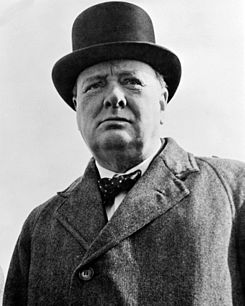 After its huge losses in the first year of the war and increasingly unpopular with the people of western Ukraine, UPA morale was plummeting. Then came Winston Churchill’s 4 March 1946 “Iron Curtain” speech in Fulton, Missouri, reviving UPA’s hopes.
Churchill claimed, “War was inevitable”. The UPA had been trying to convince people that the Americans and British would soon intervene. Churchill’s speech galvanized the UPA and the number of attacks they carried out increased by 300%. Initially, the Soviet’s dismissed UPA claims of Western backing. After Churchill’s speech they began to pay attention to evidence of Western backing for the UPA.
The OUN/B had relocated to Munich, Germany, which the NSDAP had called the “Stadt der Bewegung” (city of the movement) because of the failed plot that had launched Hitler’s career there. Stepan Bandera was in hiding. Moving from place to place, he had multiple addresses and aliases. By fall of 1945 he was running a spy school near Munich for Western intelligence, where the Gehlen organisation (later the Bundesnachrichtendienst– BND) would be stationed until 1990.
The US kept a safe house for Bandera in Munich. Bandera was constantly guarded by 10 ruthless bodyguards known as the “Black Hand” who killed an unknown number of people suspected of being Soviet agents. US intelligence kept Bandera informed in advance of Soviet attempts to arrest kidnap or assassinate him.
In 1945 Munich was home not only to the Gehlen Org, but nascent operations of US anti-Soviet covert action agencies, e.g. OPC’s radio stations. The infamous mosque used to foment new Pan-Turkism and the al Qaeda operation were located in Munich, too. The city became the domicile of the ABN (Anti-Bolshevik Bloc of Nations), the Ukrainian Red Cross, the Plast scouting organization, and the League of Political Prisoners all run out of the same OUN/B headquarters. Technically the OUN/B in Munich was called the ZCh OUN (Foreign Units of the OUN). It was run by Stepan Bandera and Yaroslav Stetsko.
Stetsko was the brains behind Bandera, according to researcher Moss Robeson. Stetsko had declared himself Prime Minister of Ukraine back on 30 June 1941 since Bandera had been barred from entering Ukraine. Stetsko would head the ABN, created in 1946, although the OUN/B preferred to date its origins to 1943 when Alfred Rosenberg had organized the Conference of the Enslaved Peoples of Asia and Europe. The conference was a disaster. The OUN/B burned the records and assassinated several attendees. The ABN still preferred the 1943 origin date.
In 1983, Yaroslav Stetsko and his wife Slava were invited to the White House to shake hands with President Reagan, Vice President Bush and UN Ambassador Jeanne Kirkpatrick for the 40th anniversary of the ABN’s founding. Slava Stetsko would take over the ABN and OUN/B after her husband’s death and was elected to the Ukrainian Rada. The ABN was the largest fascist umbrella group in the world. Both the OUN/B and the UHVR claimed to represent the UPA back in Ukraine.
In 1947, because of the failure of the MVD to crush the UPA, responsibility for the war was shifted to the MGB. The MVD turned over control of its 1,920 agents and 15,345 agents to MGB. The shift was also caused by Soviet discovery of Western backing as early as 1946 when it seized a huge cache of UPA documents. The UPA were a foreign-backed threat and therefore subject to foreign intelligence jurisdiction. 1947 was also the year in which the CIA was created. Prior to that there was a dizzying array of intelligence agencies.
The OSS had met with Lebed in Berne. There was the highly secretive military DDU recruiting Nazis and scientists seizing rockets and nuclear materials. The CIC, officially tasked with hunting Nazi war criminals, were mainly engaged in recruiting and protecting them. It was the CIC that protected Bandera. The SSU, and finally the CIG were the two forerunners of the CIA. Alongside the CIA was Allen Dulles’s other brainchild the OPC or Office of Policy Coordination run by Frank Wisner, which using State Department cover, performed the dirty work of the early CIA, before covert action was concentrated in the agency.
Wisner’s OPC would play a major role in backing the UPA war and in utilizing Ukrainian exiles. The OPC would later be merged into the CIA. The role of MI6, CIA and OPC in backing the UPA war will be discussed later.
Here it is important to note that conventional wisdom holds that Western backing for the UPA came too late and continued after the situation had become totally hopeless. There can be little truth to this since even the scanty record available shows that the UPA enjoyed Western support from its very inception. Yet as with many aspects of covert action, the record is distorted. OPC records are unavailable. MI6 does not release its records. Moreover, the CIA deliberately conceals the exact point when its support began.
Jeffrey Burds discovered, while in communication with Harry Rositzke (who ran the CIA station in Munich, the UPA war and was Lebed’s case officer), that the CIA uses a legal loophole, revealing when it began “running” the UPA war and infiltration missions into Ukraine in 1949, while covering up the fact that it began “assisting” the UPA in 1947. Interestingly in 1947 UPA head Roman Shukhevych sent a letter to the Ukrainians in exile, endorsing the CIA controlled UHVR as the official representatives of the UPA while admitting that the OUN/B had founded the UPA and hoping they would reunite. Bandera was outraged and declared it to be a Soviet forgery.
So to return to Western Ukraine during the first phase of the UPA war: The UPA had operated in large bands of 600 men that recklessly fought the Red Army and the NKVD/MVD head on. However they suffered heavy losses and went underground. One in every four homes in Western Ukraine had hidden bunkers where the UPA could hide during Soviet raids. There were also hidden bunkers in the forests. The Soviets were forced to switch to a more surgical approach relying on networks of informants and all manner of trickery. For example they would publicly display the corpses of dead UPA members then spy on the reaction of the villagers to find out who was upset.
The Soviets Sowed Divisions
The Soviets sowed division by releasing some early from questioning and others late to trick the UPA into believing loyal members were informants and informants were loyal members. To get the most stubborn UPA captives to talk they staged fake prison breaks by fake UPA units who would then trick the prisoner into revealing everything they knew. The UPA countered by infiltrating the Soviet agent networks feeding them misinformation. Eventually however the MGB would win this counter-intelligence game.
Gradually through a mix of successfully capturing and forcing the UPA to turn on their comrades and by periodically offering amnesties to UPA members, who lived a miserable life hiding out in lice-infected bunkers; the UPA ranks began to shrink. Many UPA members committed suicide using hand grenades to destroy their faces to protect their families.
Image: Roman Shukhevych, the leader of the UPA (Licensed under the Public Domain)
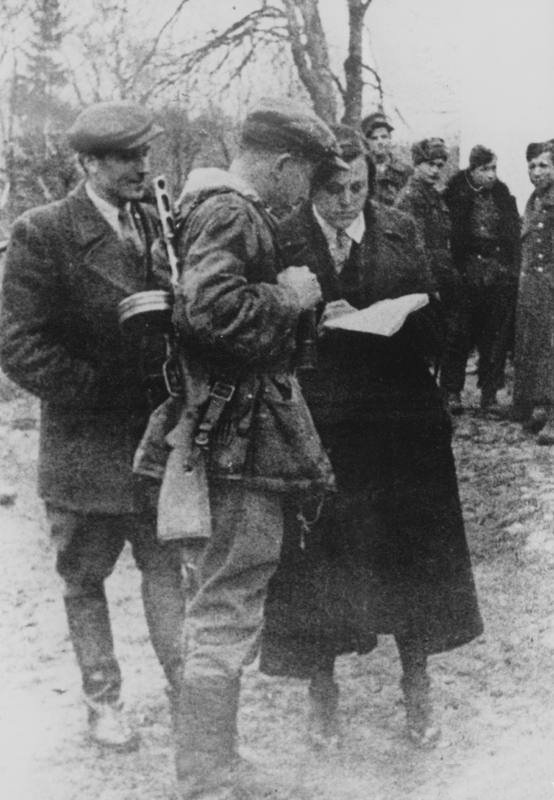
The Soviets struck a major blow in November 1948 when they killed 3 UPA Commanders and in a separate raid killed the head of the SB “Myron” who was responsible for the infiltration of Soviet intelligence. Finally on 5 March 1950, the MGB managed to kill UPA head Roman Shukhevych. According to one version he was killed and according to another version he was surrounded and committed suicide to avoid capture. Shukhevych had joined the UVO in the 1920s and attended an Abwehr school in 1925. He then joined the OUN/B and had been part of the Nachtigall Battalion that arrived with the German army in Lviv and took part in the massacres of Jews.
Shukhevych then joined the notorious Battalion 201 responsible for destroying villages in Ukraine and Belarus massacring the inhabitants. Shukhevych went on to head the UPA until his death. Today Roman Shukhevych is idolized as one of the heroes of Ukraine along with Petliura, Konovalets, and Bandera.
By 1952, there were only 647 UPA members left in Ukraine. On 24 May 24 1954, Vasyl Kuk, the last UPA commander, was arrested. In 1960 the last UPA unit, comprising only three people, was caught. The UPA war was a costly and pointless one for the people of Western Ukraine. Soviet Forces killed 153,000 “UPA or bandits”, including people who were just in the wrong place at the wrong time, arrested 134,000 people and deported 203,000 suspected UPA sympathizers or their family members. The UPA killed 20,000 Ukrainian civilians and 10,000 Soviet soldiers, security service members and destruction battalion members. The UPA killed 1,200 people in Belarus during 1944-47 and thousands more in Poland.
There were 2.5 million Ukrainian displaced persons or DP’s at the end of the war in Germany and in Austria. Most were forced labourers who had been tricked or press ganged by the Nazis, becoming slave labour back in Germany, where a system of apartheid was set up to keep them segregated from the Germans. Of these, 1,850,000 returned to the Soviet Union from 1945-1947. During the Cold War it was claimed that they were all sent off to gulags in Siberia. In reality most returned to their homes. This left only 200,000 Ukrainians in Germany and 50,000 in Austria.
Over 120,000 of them had retreated with the Nazi armies when they left Ukraine and were Nazi collaborators, OUN members, and escaped war criminals. They lived in huge displaced persons camps and the OUN/B quickly gained control of them with the backing of the British and the Americans. In the camps, the OUN/B recreated their old front groups, youth groups and scouting groups that had been used to indoctrinate the Bandera generation and would now be used to help the OUN/B and OUN/M ideologies to survive their decades in exile.
In 1948, the British quietly ordered a halt to all war crimes trials and investigations and began importing thousands of fascist émigrés.
That same year the U.S. Congress passed the Displaced Persons Act which along with the later Refugee Relief Act allowed over 500,000 refugees from Eastern Europe to enter the U.S. Many were innocent victims of the war but others were fascist collaborators that the U.S. felt would be useful during the Cold War. Tens of thousands of OUN members, UPA vets, and Ukrainian SS veterans were brought into the U.S., Britain, Australia and Canada.
The CIA also pushed through a secret agreement called the 100 Persons Act which allowed the CIA to bring in 100 people and their families every year and give them citizenship regardless of whatever crimes they had committed in the past that would bar their entry. It was a deal between the CIA, the Justice Department and the INS allowing the CIA to bring in 100 notorious Nazi war criminals every year “In the interests of National Security.” This was used to shield the worst of the worst like Mykola Lebed and Pavlo Shandruk the former leader of the Waffen SS division “Galizia”.
U.S. Intelligence recruited the OUN/B to wage a reign of terror in the displaced persons camps in what was called Operation Ohio. The OUN/B were used as torturers and assassins in an attempt to root out Soviet agents. Mykola Lebed was in charge. He would head the rival faction UHVR, and the rivalry between Lebed and Bandera would turn murderous by 1947. Lebed was initially a member of both the Zch OUN (or OUN/B) and UHVR until 1948. The OUN/B gave a list of a 100 suspected Soviet spies to the U.S. and the U.S. military arrested them. Then the OUN/B dressed in American military uniforms, tortured the prisoners.
Also as part of Operation Ohio, the OUN/B operated torture sites at each of the displaced persons camps. The OUN/B were given a license to kill anyone they suspected of being a spy and were used by the Americans as assassins and kidnappers in its battles with Soviet agents. (Rhee’s police and KMT agents were used in the POW camps for the same purpose during the war in Korea.) The OUN/B and the ABN created a huge anti-repatriation movement in the DP camps. They operated a massive forgery operation to create fake identities to avoid being deported as war criminals.
The OUN/B also operated a huge counterfeiting ring that printed fake American money. The OUN/B and their allies in the ABN staged riots when Soviet officials attempted to visit the camps, pelting them with bricks. They even battled the German police and military when they tried to stop a mob from attacking a Soviet consulate. In the Soviet Union itself, prisoners from the OUN/B and UPA were well organized and when they arrived in the gulags, the murder rate began to skyrocket according to anti-Soviet novelist Aleksandr Solzhenitsyn. This OUN/B-UPA network in Soviet prisons survived well into the 1970s.
When Ukrainian dissidents organizing around the Helsinki committee’s human rights platform were arrested during the 1970s, many became indoctrinated by the UPA veterans. Ukrainian liberalism became allied with Ukrainian fascism. The OUN-UPA are believed to have organized a number of riots and uprisings in Soviet prisons during the Cold war although the details are sketchy.
Perhaps the most shocking story of Ukrainian fascists in exile is the tale of the 14th Waffen SS Division “Galizia”, led by Pavlo Shandruk. In April 1945 they had been renamed the Ukrainian National Army. They “surrendered” to the British on 10 May 1945 yet were allowed to keep their weapons and officers and were even given more weapons by the British. They were resettled in Rimini and were not even classified as prisoners of war. They kept their guns and were allowed to leave whenever they wanted. The British had already made deals with Lebed and Bandera. Father Ivan Hryn’okh, their chaplain, had found a patron in Ukrainian American Archbishop Ivan Buchko, who lobbied Pope Pius XII on their behalf.
Pope Pius XII was a Nazi sympathizer and a rabid anti-communist. Hryn’okh was also a key ally of Lebed in the UHVR and was on the CIC payroll. The UK and US saw the SS-Galizia division as a fit, well-trained, ideologically reliable force that could be used against the Soviets. They refused to turn them over to the Soviets because Galicia had been part of Poland in 1939. In Britain, Canada, and the U.S. the Ukrainian diaspora lobbied ceaselessly on their behalf.
In 1947 Italy was about to be given back control of its government, including the POW camps, and the British feared the Galizia division might be sent back to the Soviet Union. They conducted a phony investigation run by Brigadier General Fitzroy Maclean to see if any of them were war criminals. Even those who proudly admitted their crimes were protected and given a clean record. Finally 8,000 of them were sent to Britain as part of the labour service program. From there many were sent to Canada and the U.S. joining the pro-OUN/B Ukrainian diaspora building monuments to the Waffen SS Galizia division in both Canada and the U.S.
Most of the populace was shocked when the media even dared to report it. Pavlo Shandruk was allowed to live happily in exile in New Jersey publishing his memoirs under his own name. In New Jersey there is a cemetery where many notorious OUN, UPA, and Waffen SS veterans are buried and glorified as heroes by the OUN diaspora. In 1993 many Waffen SS veterans held a reunion in Lvov Ukraine where they were hailed as heroes. Thus it was no oversight when Ronald Reagan appeared beside Chancellor Helmut Kohl to honour Waffen SS dead at the war graves ceremony in Bitburg.
At the end of World War 2 Reinhard Gehlen had buried a huge trove of intelligence documents and then made a deal with the U.S.. Soon Gehlen was running a huge network of ex-Nazis in a spy network known as the Gehlen Organization, which would form the basis for the West German intelligence agency known as the BND. Gehlen got a lot of his intelligence from the OUN/B and the UPA.
The Gehlen Org men in charge of operations with émigré groups like the OUN/UPA were both ex-SS members deeply involved in planning and carrying out the mass murders under the so-called Gesamtplan Ost, Franz Six (Amt VII – Ideology and Research) and Emil Augsburg, who had served in AMT VI of the RSHA (the NSDAP’s equivalent of DHS in the US), the Interior Ministry’s parallel to Gehlen’s department (in the Abwehr, responsible for foreign intelligence operations. Augsburg had served directly under Adolf Eichmann. Franz Six was convicted later as a war criminal for ordering the death of hundreds of Jews at Smolensk. John J. McCloy, Standard Oil lawyer and War Department functionary, commuted his sentence while serving as US High Commissioner of Germany.
Cold War Intelligence Ops. in Support of OUN, UPA and BDJ
Support for the UPA war was closely tied to the German Gladio element, the BDJ (League of German Youth). Despite its innocuous name (many post-war Nazi organisations in and out of government were given harmless sounding names) its membership comprised former SS and Wehrmacht veterans like Klaus Barbie, “the Butcher of Lyons”. Before Barbie was assigned to South America as a CIA asset, he was deeply involved with managing the Ukrainians and helped recruit Mykola Lebed for the U.S.
The BDJ included the Technical Services Unit (later the Technisches Hilfswerk), which caused a scandal when it was discovered that it had an assassination list of 40 German Social Democrats. The THW was founded with a paramilitary, civil defence function not unlike that of the Civil Air Patrol in the US. Units of the latter were found to have harboured anti-Castro agents as well as people allegedly complicit in US assassinations. The CIC helped the Technical Service Unit hide members from the Western German Police.
MI6 had also re-established its ties to the OUN/B and UPA supplying them with arms in exchange for intelligence. By 1946 the Americans Allen Dulles and George Kennan had already launched, unofficially, Operation Rollback, a plan to back anti-Soviet Resistance groups like the UPA in hopes of sparking counter-revolutionary uprisings or at least to disrupt and destabilize the Soviet bloc. By 1948 this had become official U.S. government policy with the NSC (National Security Council) authorizing the training and arming of underground resistance, guerrillas, and “refugee liberation groups” (fascist exiles) including the UPA.
The UPA was in fact the largest and most successful anti-Soviet resistance group. CIA’s Frank Wisner’s right hand man for OPC operations in Eastern Europe was Frank Lindsay who had been OSS adviser to Tito’s partisans during the war. Douglas Valentine told me that at the end of the Cold War Lindsay ran a program to send top Ukrainian intelligence officers to Harvard to be re-educated along pro-American lines.
NSC Directive 10/2 authorized all out psychological warfare against the Soviet bloc and led to the creation of the National Committee for a Free Europe, which set up governments in exile and gave birth to Radio Free Europe by 1950. On its board were Cold War psywarriors like Allen Dulles and Frank Wisner along with a who’s who of corporate America. NSC 20 led to the creation of the Wisner controlled AMCOMLIB (American Committee for Liberation from Bolshevism), which attempted to unite all the Soviet exiles.
It was a doomed mission because not only did the exiles feud with their own countrymen as in the case of the Ukrainians but they also hated foreigners especially Russians. The Russian fascists of the NTS and Vlasov’s army would spend decades feuding with the OUN/B and UHVR. Soviet moles in both groups also constantly fuelled the various factional rivalries.
Still, Frank Wisner now had 100 million dollars a year in Marshall funds to bankroll the Soviet exiles.
The Ukrainians were among his favourites. AMCOMLIB would lead to the creation of Radio Liberation from Bolshevism later renamed Radio Liberty which began broadcasting in 1953. It employed many Ukrainian fascists who were allowed to propagandize their countrymen. To cover up the CIA/OPC funding for the National Committee for a Free Europe they created the front group CFF (Crusade For Freedom) which would pretend to fundraise and while fundraising it would illegally propagandize the American people to support the Cold War and support “the brave freedom fighters” which included OUN/UPA veterans in the CIA backed UHVR as well as many other former fascist collaborators.
The CFF received USD 5 million from the CIA but it also made a deal with the Ad Council allowing it thousands of hours of free airtime. The CIA is technically forbidden from operating domestically (a rule it breaks constantly). In this case its USD 5 million dollars for the CFF was more than the amount spent on the Dewey and Truman campaigns in 1948 and was the most expensive advertising campaign of its time. OSS veteran and future CIA director Bill Casey was deeply involved in CFF.
One of its key spokesmen was future President Ronald Reagan, who would grant the OUN and ABN unprecedented influence in his administration especially over the content of Radio Liberty. Initially Radio Liberty would turn many Ukrainians against the U.S. because it sounded so much like Nazi wartime propaganda. However by the 1980s Radio Liberty would play a key role in popularizing the revival of OUN/B ideology in Ukraine.
In November of 1949 Wisner made a deal with the military to supply him with a huge stockpile of explosives. Two months later the U.S. military supplied him with enough weapons and ammunition to supply several small armies. The U.S. built armies of Soviet exiles using Labour Service Units as cover. Many were recruited from Waffen SS veterans including the Ukrainian SS Galizia division. At the same time late in 1949 the U.S. and Britain began airdropping Ukrainian agents into Ukraine. Over the next four years they would drop 75 agents by parachute in attempts to contact the UPA.
Other agents were sent by submarine, in hot air balloons or on foot. Unfortunately for Wisner 1949 was also the year Soviet undercover agent Kim Philby arrived in the U.S. as MI6 liaison to the OPC and CIA. Nearly every airdropped Ukrainian agent was captured and the seeming exceptions were recruited as Soviet moles. The rest were arrested, interrogated and shot if they refused to co-operate. Even if Philby had not been involved the OUN/B and UHVR were riddled with Soviet moles keeping them well informed on everything the UK and US were planning. Long-time OSS/ CIA operative and head of the Berlin station, Peter Sichel, resigned reportedly because he could not support the futility of the agency’s Ukraine operations.
<