Select date

Number of Planned Low-orbit Satellites Now Exceeds One Million


All Global Research articles can be read in 51 languages by activating the Translate Website button below the author’s name.
To receive Global Research’s Daily Newsletter (selected articles), click here.
Click the share button above to email/forward this article to your friends and colleagues. Follow us on Instagram and Twitter and subscribe to our Telegram Channel. Feel free to repost and share widely Global Research articles.
***
On Sunday, SpaceX launched 23 satellites from Cape Canaveral in the morning, and 22 more from Vandenberg Air Force Base in the evening. This brought the total number of operating satellites irradiating the Earth to about 8,800.
SpaceX has been sending up satellite-laden rockets every few days this year, in its haste to satisfy an insatiable demand for bandwidth by the billions of human beings who use cell phones. But SpaceX is not the only one. Hundreds of companies are competing for a share of the global market to supply Internet from the sky to the world’s population.
On January 5, 2022, I sent out a newsletter listing 147 companies and government agencies from 34 countries that were operating, launching, or planning fleets of satellites that, if they were all launched, would total about half a million in our skies, far outnumbering the visible stars. On October 17, 2023, the journal Science, reviewing filings with the International Telecommunication Union, informed the world that the number of filings and the number of planned satellites have again more than doubled. There are more than 90 filings for constellations of over 1,000 satellites each. Twenty-three have over 5,000 satellites, and eight have over 10,000 satellites. As of December 31, 2022, the number of satellites being planned by 300 companies and governments exceeded one million. And in June, 2023, E-Space, a company based in France and founded by Greg Wyler in 2022, filed a plan for a single megaconstellation containing 116,640 satellites. E-Space had previously filed a plan, via the government of Rwanda, for an even larger constellation containing 327,320 satellites. Two days after his new filing with the ITU, Wyler clarified that “Our filing in France is in addition to our filings in Rwanda.”
Our new network, People Without Cell Phones, is more important than ever. The only way to diminish the demand for bandwidth that is turning the Earth into a giant computer, with all living beings electrocuted inside of it, is to stop using cell phones. Not to use them less frequently, but to throw them away. The ability to use them, no matter how infrequently, requires the entire planet to be irradiated. Please join our network by forming a local chapter where you live. You can set your own rules, but it is important to have meetings in person. Please contact me if you need help and let me know that you are doing it. Our goal is to establish an expanding global presence of communities that do not use cell phones. It is up to us.
*
Note to readers: Please click the share button above. Follow us on Instagram and Twitter and subscribe to our Telegram Channel. Feel free to repost and share widely Global Research articles.
Arthur Firstenberg, President, Cellular Phone Task Force, Author, The Invisible Rainbow: A History of Electricity and Life, Administrator, International Appeal to Stop 5G on Earth and in Space, Caretaker, ECHOEarch.org (End Cellphones Here On Earth)
Featured image is from the author
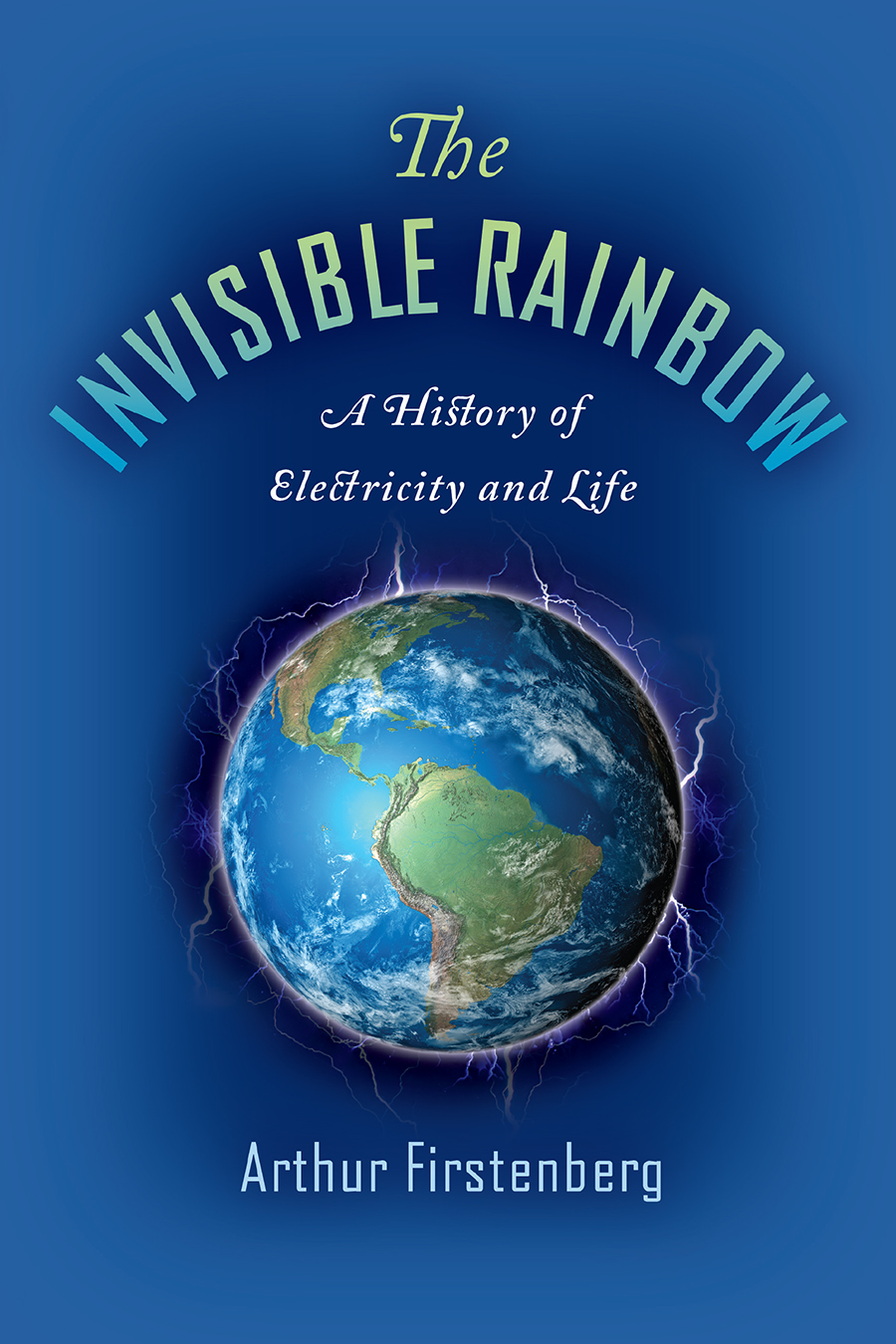 The Invisible Rainbow: A History of Electricity and Life
By Arthur Firstenberg
Pages: 576
Publisher: Chelsea Green Publishing
Publication Date: March 9, 2020
ISBN: 9781645020097
5g is being rolled out across the country, despite growing evidence that it is disruptive to our health, our safety, and the environment. The Invisible Rainbow is the groundbreaking story of electricity as it’s never been told before—exposing its very real impact on the biosphere and human health.
Over the last 220 years, society has evolved a universal belief that electricity is ‘safe’ for humanity and the planet. Scientist and journalist Arthur Firstenberg disrupts this conviction by telling the story of electricity in a way it has never been told before—from an environmental point of view—by detailing the effects that this fundamental societal building block has had on our health and our planet.
In The Invisible Rainbow, Firstenberg traces the history of electricity from the early eighteenth century to the present, making a compelling case that many environmental problems, as well as the major diseases of industrialized civilization—heart disease, diabetes, and cancer—are related to electrical pollution.